What Are Header Bidding Companies?
Header bidding companies are specialized ad tech providers that offer solutions enabling publishers to auction their ad inventory to multiple demand sources simultaneously before making ad server calls. These companies have revolutionized programmatic advertising by creating a more competitive and transparent auction environment that typically results in higher CPMs and increased revenue for publishers.
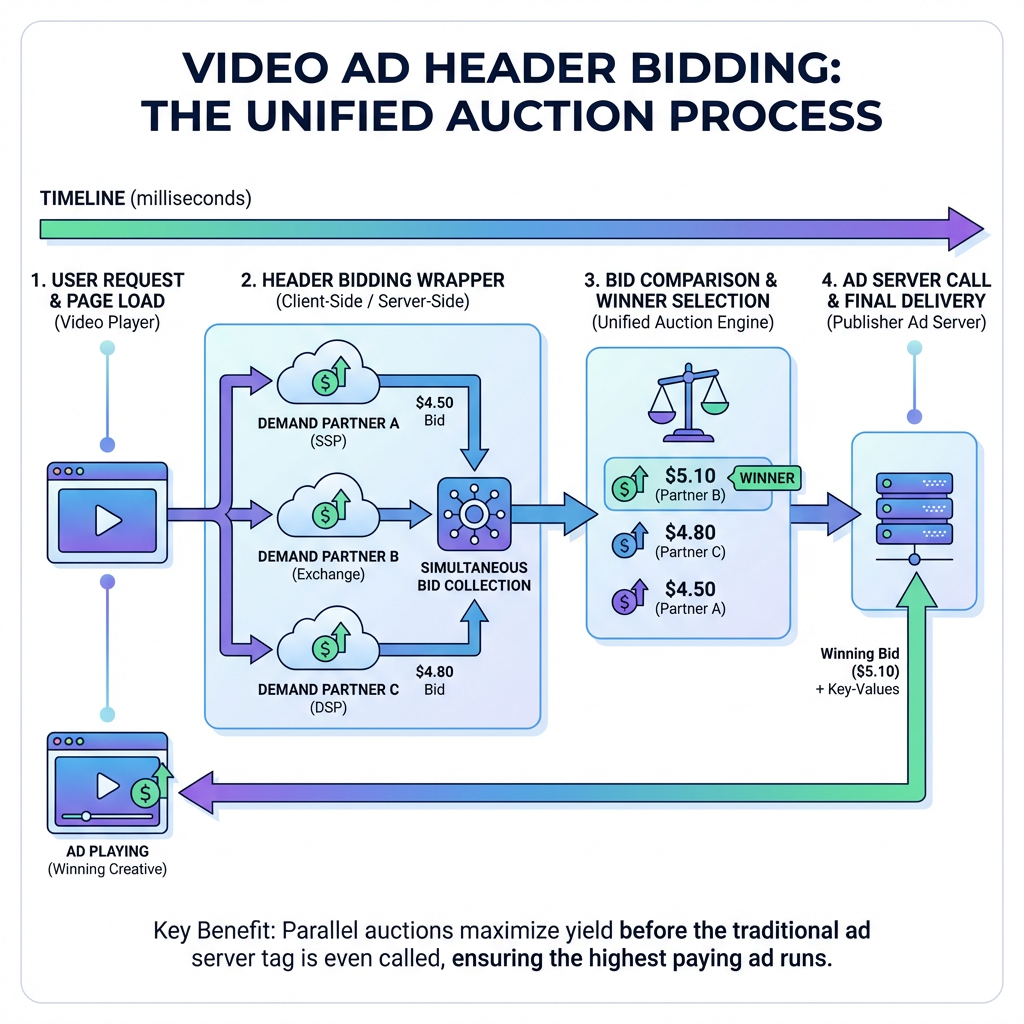
Unlike traditional waterfall setups where demand sources bid sequentially, header bidding companies facilitate parallel auctions that occur in the browser’s header code or through server-side integrations. This approach ensures that the highest-paying advertiser wins the impression, regardless of their position in the traditional hierarchy.
The Evolution of Header Bidding Technology
The programmatic advertising landscape underwent a significant transformation with the introduction of header bidding technology around 2014. Traditional programmatic setups relied on a waterfall method where ad exchanges and networks were prioritized based on historical performance rather than real-time bid values.
Header bidding companies emerged to solve several critical problems:
- Revenue Optimization: By creating true competition among buyers
- Transparency: Providing clear visibility into bid responses and pricing
- Inventory Monetization: Ensuring every impression receives maximum market value
- Reduced Latency: Streamlining the auction process compared to complex waterfall chains
Types of Header Bidding Solutions
Client-Side Header Bidding
Client-side solutions execute auctions directly in the user’s browser through JavaScript code placed in the website’s header. This approach offers:
Advantages:
- Complete transparency and control for publishers
- Direct integration with demand partners
- Real-time debugging and optimization capabilities
- Lower infrastructure costs
Considerations:
- Potential impact on page load times
- Browser limitations and timeout constraints
- Technical complexity for implementation and maintenance
Server-Side Header Bidding
Server-side solutions conduct auctions on remote servers before returning winning bids to the publisher’s ad server. Key benefits include:
Advantages:
- Minimal impact on page load speed
- Ability to include more demand partners without browser limitations
- Better user experience and site performance
- Advanced audience data integration
Considerations:
- Reduced transparency compared to client-side solutions
- Potential for increased discrepancies
- Dependency on third-party infrastructure
- Cookie syncing challenges
Hybrid Solutions
Many header bidding companies now offer hybrid approaches that combine client-side and server-side elements, allowing publishers to optimize for both performance and revenue based on specific use cases.
Leading Header Bidding Companies and Their Specializations
Enterprise-Level Solutions
Google Ad Manager: Offers Exchange Bidding (server-side) and supports Prebid.js integration. Particularly strong for publishers already integrated with Google’s ecosystem, providing seamless integration with Google Ad Exchange and other Google demand sources.
Amazon Publisher Services (APS): Provides Transparent Ad Marketplace (TAM) with strong Amazon DSP integration. Especially valuable for e-commerce and retail-focused publishers who can leverage Amazon’s extensive advertiser base.
Index Exchange: Offers both client-side and server-side solutions with a focus on premium inventory and brand safety. Known for high-quality demand and strong performance in display and video advertising.
Specialized Header Bidding Providers
PubMatic: Provides comprehensive programmatic solutions with advanced analytics and optimization tools. Strong focus on mobile and video inventory monetization.
OpenX: Offers programmatic advertising solutions with emphasis on premium publisher partnerships and brand-safe environments.
Sovrn: Focuses on independent publishers and content creators, offering accessible header bidding solutions for smaller-scale operations.
Key Features to Evaluate in Header Bidding Companies
Technical Capabilities
Integration Flexibility: Look for companies that support multiple integration methods including Prebid.js, proprietary SDKs, and custom implementations. The best providers offer comprehensive documentation and technical support throughout the integration process.
Demand Partner Ecosystem: Evaluate the breadth and quality of demand sources. Premier header bidding companies maintain relationships with major DSPs, ad networks, and direct advertisers across various industry verticals.
Real-Time Analytics: Advanced reporting capabilities should include bid-level data, timeout analysis, partner performance metrics, and revenue attribution. This granular data enables continuous optimization and troubleshooting.
Revenue Optimization Tools
Dynamic Pricing: Sophisticated companies offer algorithmic pricing optimization that adjusts floor prices based on historical performance, seasonal trends, and real-time market conditions.
A/B Testing Frameworks: Built-in testing capabilities allow publishers to experiment with different configurations, timeout settings, and partner combinations to maximize revenue.
Yield Management: Advanced yield optimization tools that automatically adjust auction parameters to balance fill rate, CPM, and user experience metrics.
Implementation Strategies for Header Bidding Success
Pre-Implementation Planning
Before selecting a header bidding company, publishers should conduct a comprehensive audit of their current programmatic setup. This analysis should include:
- Current Revenue Baseline: Establish clear metrics for existing ad performance
- Technical Infrastructure Assessment: Evaluate current ad server setup and development resources
- Audience Analysis: Understand user demographics and behavior patterns
- Competitive Landscape: Research industry-specific demand patterns
Integration Best Practices
Gradual Rollout Strategy: Begin with a small percentage of traffic to test configuration and identify potential issues before full deployment. This approach minimizes risk while allowing for optimization based on real performance data.
Timeout Optimization: Configure appropriate timeout settings that balance revenue potential with user experience. Typical timeout ranges vary from 1000-2000 milliseconds depending on audience and content type.
Quality Assurance Testing: Implement comprehensive testing protocols including ad rendering verification, revenue tracking accuracy, and page performance impact assessment.
Video Advertising and Header Bidding
Video inventory presents unique opportunities and challenges in header bidding implementations. Publishers utilizing video content should prioritize header bidding companies with strong video advertising capabilities and support for industry standards like VAST and VPAID.
For publishers implementing video strategies, solutions like Veedmo can complement header bidding setups by providing optimized video player technology that integrates seamlessly with programmatic advertising demand.
Video-Specific Considerations
Format Support: Ensure your chosen header bidding company supports various video ad formats including pre-roll, mid-roll, and outstream placements.
Player Integration: Evaluate compatibility with existing video players and content management systems.
Performance Optimization: Video ads require additional considerations for buffering, autoplay policies, and mobile optimization.
Revenue Impact and Performance Metrics
Expected Revenue Improvements
Publishers typically experience revenue increases of 20-50% when implementing header bidding solutions, though results vary significantly based on:
- Traffic Quality: Premium audiences with higher engagement rates see greater improvements
- Geographic Distribution: Publishers with traffic from high-value markets benefit most
- Content Vertical: Certain industries like finance, technology, and e-commerce command higher CPMs
- Implementation Quality: Proper configuration and ongoing optimization are crucial for maximum results
Key Performance Indicators
Revenue Metrics:
- CPM improvements across different ad units
- Fill rate optimization and inventory monetization
- Revenue per visitor and session value increases
Technical Performance:
- Page load time impact and Core Web Vitals scores
- Bid response rates and timeout analysis
- Ad viewability and user engagement metrics
Common Implementation Challenges and Solutions
Technical Issues
Latency Management: Header bidding can impact page load times if not properly optimized. Solutions include asynchronous loading, appropriate timeout settings, and lazy loading for below-the-fold inventory.
Ad Quality Control: Increased demand sources can introduce quality issues. Implement robust creative scanning, brand safety measures, and performance monitoring to maintain user experience standards.
Revenue Attribution: Accurate tracking becomes more complex with multiple demand sources. Ensure proper analytics implementation and reconciliation processes with all participating partners.
Operational Challenges
Partner Management: Coordinating multiple demand partners requires ongoing relationship management, performance monitoring, and contract negotiations.
Technical Support: Complex implementations require adequate technical resources for troubleshooting and optimization. Evaluate the support quality and availability of potential header bidding companies.
Compliance and Privacy: Ensure all implementations comply with privacy regulations like GDPR and CCPA, including proper consent management and data handling procedures.
Future Trends in Header Bidding Technology
Privacy-Focused Solutions
As third-party cookie deprecation approaches, header bidding companies are developing alternative targeting and measurement solutions including:
- First-Party Data Integration: Enhanced tools for utilizing publisher-owned audience data
- Contextual Targeting: Improved content-based advertising capabilities
- Privacy-Safe Identifiers: Implementation of cookieless identification solutions
Advanced Optimization Technologies
Machine Learning Integration: AI-powered optimization algorithms that automatically adjust auction parameters based on real-time performance data.
Real-Time Personalization: Dynamic creative optimization and audience segmentation capabilities that enhance ad relevance and performance.
Cross-Device Tracking: Improved user journey tracking and attribution across multiple devices and platforms.
Selecting the Right Header Bidding Company
Evaluation Framework
Technical Assessment:
- Integration complexity and available resources
- Scalability and performance requirements
- Existing technology stack compatibility
- Development and maintenance capabilities
Business Considerations:
- Revenue sharing models and fee structures
- Contract terms and commitment requirements
- Support quality and account management
- Company stability and industry reputation
Strategic Alignment:
- Target audience overlap with demand sources
- Content vertical specialization
- Geographic coverage and market focus
- Long-term growth and expansion plans
Due Diligence Process
Conduct thorough reference checks with existing clients, request detailed case studies with similar publishers, and negotiate trial periods to evaluate performance before committing to long-term agreements.
Conclusion
Choosing the right header bidding company is a critical decision that can significantly impact publisher revenue and operational efficiency. Success requires careful evaluation of technical capabilities, demand quality, support resources, and strategic alignment with business objectives.
Publishers should prioritize companies that offer transparent reporting, comprehensive technical support, and proven track records with similar publishers. The most effective implementations combine strong technology partnerships with ongoing optimization and performance monitoring.
As the programmatic advertising landscape continues to evolve with privacy changes and new technologies, selecting a header bidding company with a clear vision for future development and adaptation will ensure long-term success and revenue growth.