YouTube Ads Viewability: Complete Guide for Publishers and Ad Ops Professionals
Viewability has become one of the most critical metrics in digital advertising, particularly for video content on platforms like YouTube. For publishers and ad ops professionals, understanding and optimizing YouTube ads viewability directly impacts revenue, advertiser satisfaction, and long-term monetization success.
This comprehensive guide explores the intricacies of YouTube ads viewability, from fundamental concepts to advanced optimization strategies that can transform your video advertising performance.
Understanding YouTube Ads Viewability Standards
Industry-Standard Viewability Metrics
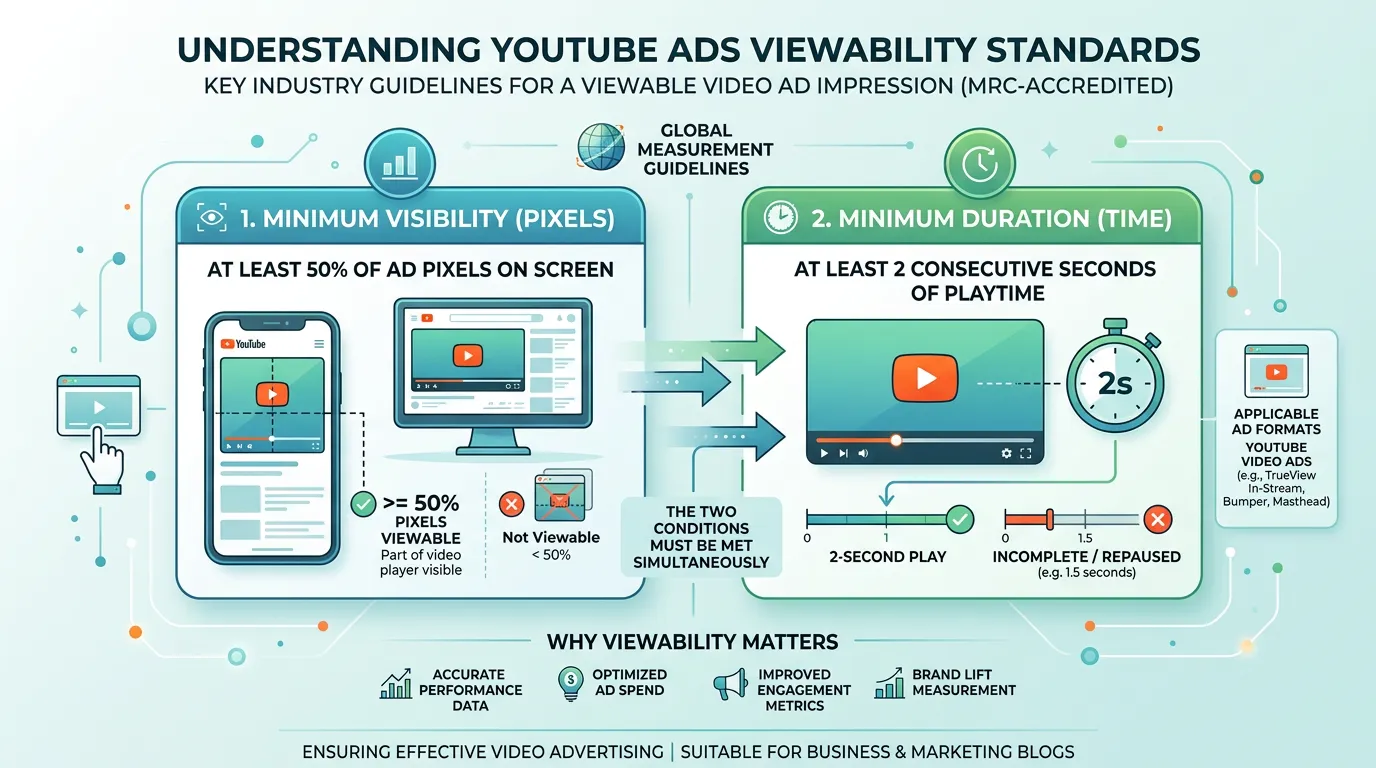
The Interactive Advertising Bureau (IAB) and Media Rating Council (MRC) have established clear standards for video ad viewability. For YouTube ads, an impression is considered viewable when:
- At least 50% of the ad’s pixels are visible on screen
- The ad remains visible for a minimum of 2 consecutive seconds
- Audio is enabled and playing (for ads with sound)
These standards apply across all YouTube ad formats, including pre-roll, mid-roll, and display ads that appear alongside video content. However, YouTube’s own measurement methodology may include additional factors such as user engagement signals and viewport positioning.
YouTube’s Viewability Measurement Approach
YouTube employs sophisticated measurement technologies that go beyond basic pixel-based detection. Their system considers:
- Active browser tabs: Ads playing in background tabs typically don’t count toward viewable impressions
- Scroll position: The ad’s position relative to the user’s viewport
- Player size: Larger video players generally achieve higher viewability rates
- User interaction: Click-through rates and engagement signals influence viewability scoring
For publishers working with YouTube’s advertising ecosystem, understanding these nuances is crucial for optimizing ad placements and maximizing revenue potential.
Types of YouTube Ads and Their Viewability Challenges
Pre-roll Advertisements
Pre-roll ads, which play before the main video content, typically achieve the highest viewability rates on YouTube. Since users have intentionally clicked to watch a video, they’re more likely to remain engaged during the initial seconds of ad playback.
Viewability optimization strategies for pre-roll:
- Ensure immediate video autoplay upon page load
- Minimize loading delays that might cause user abandonment
- Implement proper VAST (Video Ad Serving Template) tags for accurate measurement
- Use engaging creative content in the first 2 seconds to maintain viewer attention
Mid-roll Ad Insertion
Mid-roll ads present unique viewability challenges since they interrupt the viewing experience. However, they often achieve high completion rates when properly implemented.
Key considerations for mid-roll viewability:
- Strategic timing: Place ads during natural content breaks
- Frequency capping: Avoid overwhelming viewers with too many interruptions
- Content relevance: Ensure ads align with the video’s topic and audience
- Smooth transitions: Implement seamless ad insertion to prevent jarring experiences
Display and Overlay Ads
YouTube’s display ads and overlay advertisements face different viewability challenges compared to video ads. These ads must compete for attention with the main video content and may be easily overlooked by viewers.
Technical Implementation for Optimal Viewability
VAST Integration and Measurement
Proper VAST implementation is fundamental to accurate viewability measurement. Publishers should ensure their ad serving infrastructure supports:
- VAST 4.0 compatibility: The latest version includes enhanced viewability tracking capabilities
- Viewability event tracking: Implement proper event listeners for viewability milestones
- Error handling: Robust fallback mechanisms when primary ads fail to load
- Cross-domain tracking: Accurate measurement across different domains and iframes
<Impression>
  <![CDATA[https://example.com/impression?viewable=true]]>
</Impression>
<Tracking event="start">
  <![CDATA[https://example.com/tracking?event=start&viewable=true]]>
</Tracking>
Header Bidding Integration
For publishers using header bidding solutions, viewability optimization requires careful coordination between ad serving and measurement systems. Key implementation considerations include:
- Prebid.js configuration: Ensure viewability modules are properly configured
- Bid request parameters: Include viewability requirements in programmatic bid requests
- Real-time reporting: Implement systems that provide immediate viewability feedback
- Demand partner requirements: Different advertisers may have varying viewability thresholds
Video Player Optimization
The video player itself significantly impacts ad viewability. Publishers should consider solutions like Veedmo and other advanced video players that provide enhanced measurement capabilities and optimized ad insertion mechanisms.
Critical player features for viewability:
- Intersection Observer API implementation for accurate viewport detection
- Adaptive bitrate streaming to prevent buffering-related viewability issues
- Comprehensive analytics integration for detailed performance tracking
- Mobile-optimized playback for cross-device viewability consistency
Programmatic Advertising and Viewability
Real-Time Bidding Considerations
In programmatic environments, viewability predictions and measurements directly influence bid values and ad serving decisions. Publishers must understand how viewability impacts their programmatic revenue:
Viewability’s impact on programmatic performance:
- Higher CPMs: Advertisers pay premium rates for guaranteed viewable impressions
- Bid filtering: Low viewability inventory may be filtered out of premium auctions
- Performance optimization: Algorithms favor placements with consistent high viewability
- Brand safety: Viewability often correlates with brand-safe advertising environments
Supply-Side Platform Integration
When working with Supply-Side Platforms (SSPs), publishers should ensure their viewability measurement aligns with industry standards:
- Third-party verification: Integrate with services like IAS, MOAT, or DoubleVerify
- Standardized reporting: Use consistent metrics across all demand partners
- Real-time optimization: Implement systems that can adjust ad serving based on viewability performance
- Transparent measurement: Provide clear viewability data to advertisers and agencies
Optimization Strategies for Maximum Viewability
Page Layout and Design Considerations
The physical placement and presentation of video content significantly impacts ad viewability rates:
Above-the-fold placement:
- Position primary video players in immediately visible screen areas
- Avoid placing videos below lengthy text or image content
- Ensure mobile responsiveness for consistent cross-device performance
- Implement lazy loading for secondary video content to prioritize primary placements
User experience optimization:
- Minimize page load times that might cause user abandonment
- Implement smooth scrolling and navigation to keep users engaged
- Use compelling thumbnails and titles to encourage video engagement
- Provide clear video controls and progress indicators
Content Strategy for Enhanced Viewability
Content quality and relevance directly correlate with viewability performance:
Audience targeting alignment:
- Match ad content with video topics and audience interests
- Use demographic and behavioral data to improve ad relevance
- Implement contextual advertising to increase viewer engagement
- Monitor performance data to refine targeting strategies continuously
Technical Performance Optimization
Page performance directly impacts viewability, as slow-loading content leads to user abandonment:
Performance optimization checklist:
- Implement Content Delivery Network (CDN) solutions for faster video delivery
- Optimize image and video compression without sacrificing quality
- Minimize JavaScript execution that might delay ad rendering
- Use efficient caching strategies for repeat visitors
- Monitor Core Web Vitals metrics that impact user experience
Measurement and Analytics
Key Performance Indicators
Publishers should track comprehensive viewability metrics to optimize performance:
Primary viewability metrics:
- Viewable impression rate: Percentage of total impressions that meet viewability standards
- Average viewing time: Duration users spend watching video content and ads
- Completion rates: Percentage of ads viewed to completion
- Engagement metrics: Click-through rates, interaction rates, and social sharing
Revenue-focused metrics:
- Viewable CPM: Revenue per thousand viewable impressions
- Revenue per visitor: Total advertising revenue divided by unique visitors
- Fill rate optimization: Percentage of ad requests successfully filled with viewable ads
- Advertiser retention: Long-term relationship metrics with premium advertisers
Reporting and Analysis
Effective viewability optimization requires sophisticated reporting capabilities:
Essential reporting dimensions:
- Device type and operating system breakdown
- Geographic performance variations
- Time-based performance patterns
- Content category and topic analysis
- Traffic source impact on viewability
Actionable insights generation:
- Identify underperforming ad placements for optimization
- Discover high-value audience segments for targeted campaigns
- Monitor competitive landscape and industry benchmarks
- Track advertiser feedback and satisfaction metrics
Industry Trends and Future Considerations
Connected TV and Streaming Integration
As viewing habits shift toward Connected TV (CTV) and streaming platforms, viewability measurement faces new challenges and opportunities:
CTV viewability considerations:
- Full-screen viewing: CTV typically achieves higher viewability rates due to dedicated viewing experiences
- Measurement limitations: Traditional web-based tracking may not apply to streaming environments
- Cross-device tracking: Users may start viewing on one device and continue on another
- Interactive ad formats: New ad types require evolved viewability measurement approaches
Privacy and Measurement Evolution
Changing privacy regulations and browser policies impact viewability measurement:
Privacy-compliant measurement:
- First-party data utilization for viewability optimization
- Server-side measurement solutions to reduce reliance on client-side tracking
- Contextual advertising approaches that maintain viewability without personal data
- Consent management integration that doesn’t compromise measurement accuracy
Troubleshooting Common Viewability Issues
Technical Debugging
When viewability rates decline, systematic troubleshooting helps identify and resolve issues:
Common technical issues:
- Iframe conflicts: Cross-domain restrictions preventing accurate measurement
- Ad blocker interference: Software blocking viewability measurement scripts
- Network latency: Slow connections preventing proper ad loading and measurement
- Browser compatibility: Inconsistent measurement across different browsers and versions
Debugging methodology:
- Baseline establishment: Document normal viewability performance levels
- Traffic segmentation: Identify specific user segments experiencing issues
- Technical testing: Use browser developer tools to diagnose measurement problems
- Partner coordination: Work with ad serving partners to resolve integration issues
- Continuous monitoring: Implement alerts for significant viewability changes
Performance Recovery Strategies
When viewability issues arise, quick response is essential to minimize revenue impact:
Immediate response actions:
- Implement backup ad serving solutions to maintain fill rates
- Communicate transparently with advertisers about temporary issues
- Document all changes and their impact on viewability metrics
- Prioritize fixes based on revenue impact and technical complexity
Conclusion
YouTube ads viewability optimization requires a comprehensive understanding of technical implementation, user experience design, and industry standards. Publishers and ad ops professionals who master these elements will achieve higher revenue, stronger advertiser relationships, and sustainable long-term growth.
Success in viewability optimization demands continuous monitoring, testing, and adaptation to evolving industry standards and user behaviors. By implementing the strategies outlined in this guide, publishers can build robust advertising ecosystems that deliver value to both viewers and advertisers while maximizing monetization potential.
The future of video advertising viewability will continue evolving with new technologies, privacy requirements, and viewing platforms. Publishers who stay ahead of these trends while maintaining focus on fundamental viewability principles will be best positioned for continued success in the competitive digital advertising landscape.