AVOD vs FAST: Understanding the Key Differences for Publishers and Ad Revenue Optimization
The streaming landscape has evolved dramatically over the past decade, with publishers and content distributors exploring various monetization models to maximize revenue while serving audiences. Two prominent models that have gained significant traction are AVOD (Ad-supported Video on Demand) and FAST (Free Ad-supported Streaming Television). While both rely on advertising revenue and offer free content to viewers, they represent fundamentally different approaches to content delivery and audience engagement.
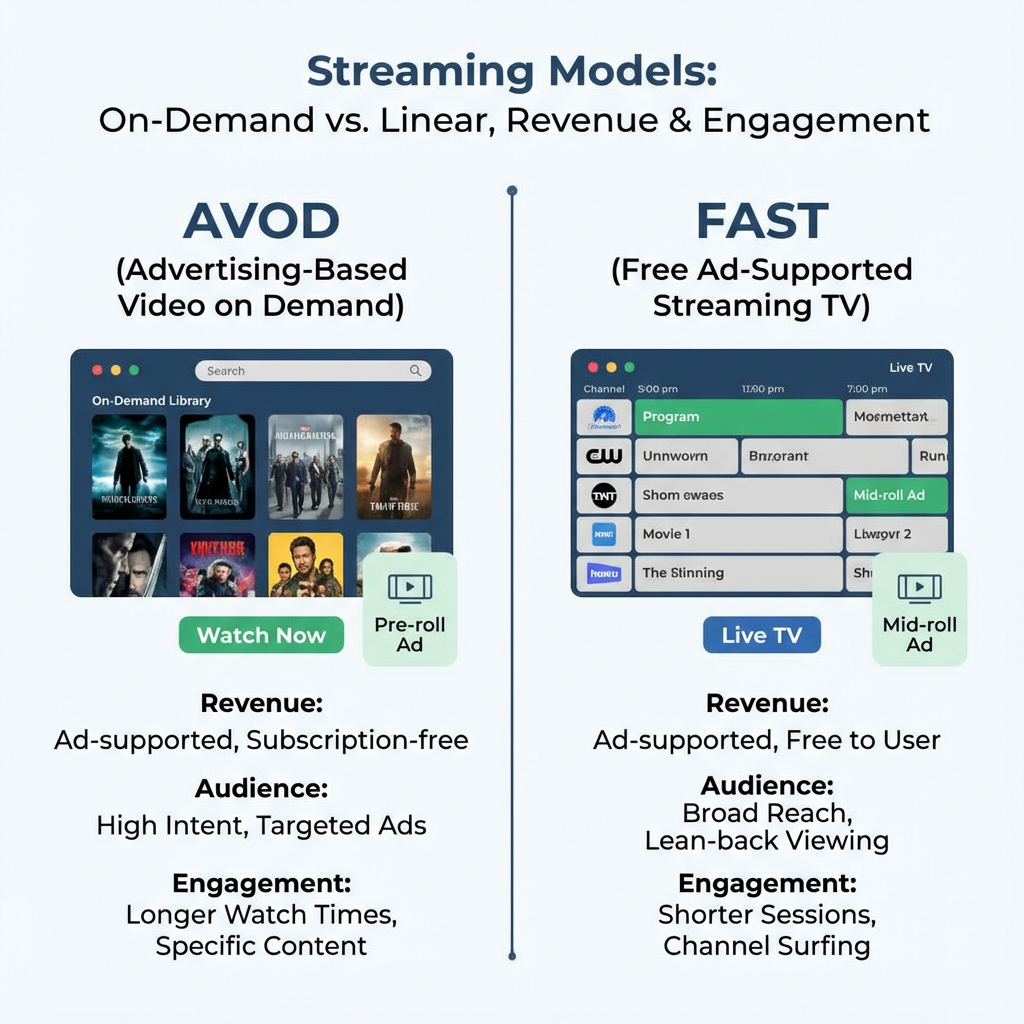
Understanding the nuances between AVOD and FAST is crucial for publishers, ad ops professionals, and content distributors looking to optimize their streaming strategies and advertising revenue. This comprehensive comparison will explore the key differences, advantages, challenges, and implementation considerations for both models.
What is AVOD (Ad-supported Video on Demand)?
AVOD represents a streaming model where viewers can access content libraries on-demand without subscription fees, with revenue generated through advertising. Unlike traditional television broadcasting, AVOD gives users complete control over what they watch and when they watch it, similar to subscription-based services like Netflix, but monetized through ads rather than monthly fees.
Key Characteristics of AVOD
On-Demand Access: Users can browse extensive content libraries and select specific titles, episodes, or movies at any time. This non-linear consumption pattern mirrors subscription video-on-demand (SVOD) services but with ad-supported monetization.
Diverse Ad Formats: AVOD platforms typically support multiple advertising formats including pre-roll, mid-roll, and post-roll video ads, as well as display advertising, sponsored content, and interactive ad experiences.
Content Ownership or Licensing: Publishers operating AVOD services usually own or license specific content, building curated libraries that differentiate their platforms from competitors.
Popular AVOD Examples
Major AVOD platforms include YouTube (the largest AVOD platform globally), Tubi, Crackle, and Pluto TV’s on-demand section. These platforms demonstrate different approaches to AVOD implementation, from user-generated content (YouTube) to professionally produced movies and series (Tubi, Crackle).
What is FAST (Free Ad-supported Streaming Television)?
FAST channels recreate the traditional linear television experience in the streaming environment, offering curated, scheduled programming that viewers watch in real-time. Unlike AVOD’s on-demand nature, FAST maintains the “lean-back” viewing experience of traditional broadcast television while leveraging internet delivery infrastructure.
Key Characteristics of FAST
Linear Programming: FAST channels follow predetermined schedules, with content airing at specific times. Viewers tune in to ongoing programs, similar to traditional TV broadcasting.
Channel-Based Organization: Content is organized into themed channels (e.g., comedy, news, sports, lifestyle) rather than searchable libraries, helping viewers discover content through browsing channels.
Programmatic Ad Integration: FAST channels typically integrate sophisticated programmatic advertising systems, enabling real-time ad decisioning and personalized ad delivery within linear programming schedules.
Popular FAST Examples
Leading FAST platforms include Pluto TV, Samsung TV Plus, Roku Channel, and Tubi’s live TV offerings. These services operate hundreds of themed channels, from classic movie marathons to 24/7 news programming.
Technical Implementation Differences
AVOD Technical Requirements
AVOD platforms require robust content management systems (CMS) capable of handling large media libraries, sophisticated search and recommendation engines, and flexible ad serving infrastructure. Publishers must implement video players that support dynamic ad insertion, typically using VAST (Video Ad Serving Template) and VMAP (Video Multiple Ad Playlist) standards.
Implementing AVOD services requires consideration of multiple technical components:
Content Delivery Networks (CDN): AVOD platforms need scalable CDN infrastructure to deliver video content efficiently across different devices and geographic regions.
Video Player Integration: Publishers often utilize advanced video player solutions like Veedmo to ensure seamless playback experiences across devices while supporting various ad formats and standards.
Database Architecture: Extensive metadata management systems are essential for powering search functionality, content recommendations, and user engagement analytics.
FAST Technical Requirements
FAST channels require different technical infrastructure focused on linear stream management and real-time ad insertion. Publishers must create continuous programming streams while maintaining broadcast-quality delivery standards.
Key technical considerations include:
Stream Assembly: FAST operations require sophisticated systems for assembling continuous programming streams from content libraries, including automated scheduling and transition management.
Server-Side Ad Insertion (SSAI): Unlike AVOD’s client-side ad insertion options, FAST channels typically rely heavily on SSAI to maintain seamless linear viewing experiences.
Broadcast Standards Compliance: FAST channels often must meet traditional broadcast technical standards, including closed captioning, audio leveling, and content rating systems.
Revenue Models and Monetization Strategies
AVOD Revenue Optimization
AVOD platforms typically generate higher CPMs (cost per mille) due to their targeted advertising capabilities and engaged user bases. The on-demand nature allows for sophisticated audience segmentation and personalized ad delivery.
Audience Data Utilization: AVOD platforms collect detailed viewing behavior data, including content preferences, viewing completion rates, and engagement patterns. This data enables premium advertising rates and advanced audience targeting.
Flexible Ad Load Management: Publishers can adjust ad frequency and placement based on content types, user behavior, and advertiser requirements. Premium content might support higher ad loads, while user acquisition content might feature lighter ad experiences.
Direct Sales Opportunities: AVOD’s content categorization enables publishers to offer targeted advertising packages to specific industry verticals.
FAST Revenue Characteristics
FAST channels often achieve scale through programmatic advertising while maintaining consistent ad inventory availability. The linear nature provides predictable ad slot availability but may limit targeting precision compared to AVOD.
Programmatic Scale: FAST channels excel at delivering large-scale programmatic advertising campaigns, particularly for brand awareness objectives requiring broad reach.
Consistent Ad Inventory: Linear programming provides predictable ad break patterns, enabling publishers to guarantee specific impression volumes to advertisers.
Lower Operational Complexity: FAST channels often require less content curation and recommendation engine sophistication, potentially reducing operational costs.
Audience Engagement Patterns
AVOD User Behavior
AVOD audiences typically demonstrate higher engagement levels, actively selecting content and often completing full episodes or movies. This intentional viewing behavior generally correlates with increased advertising effectiveness and higher completion rates.
Users approach AVOD platforms with specific viewing intentions, leading to:
Higher Completion Rates: On-demand selection typically results in viewers completing larger portions of chosen content.
Active Discovery: Users actively browse and search for content, creating opportunities for cross-promotion and content recommendation monetization.
Session Planning: Many AVOD users plan viewing sessions, potentially increasing tolerance for advertising when presented appropriately.
FAST Audience Characteristics
FAST audiences often seek passive entertainment experiences, tuning in for background viewing or channel surfing similar to traditional television consumption patterns.
FAST viewing patterns include:
Passive Consumption: Users frequently discover content by browsing channels rather than searching for specific titles.
Longer Session Duration: Linear programming can encourage extended viewing sessions as users continue watching scheduled content.
Lower Decision Fatigue: The curated, scheduled nature reduces choice paralysis common in extensive on-demand libraries.
Content Strategy Implications
AVOD Content Curation
AVOD success often depends on building compelling content libraries that encourage repeat visits and extended browsing sessions. Publishers must balance popular titles that drive user acquisition with niche content that serves specific audience segments.
Successful AVOD content strategies typically include:
Tentpole Content: High-profile movies or series that drive user acquisition and platform awareness.
Long-tail Inventory: Diverse content libraries serving various interests and demographics, increasing overall platform value.
Exclusive Programming: Original or exclusively licensed content that differentiates the platform from competitors.
FAST Programming Strategy
FAST success relies on creating engaging channel experiences that encourage extended viewing sessions. Programming directors must balance content variety with thematic consistency within individual channels.
Effective FAST programming approaches include:
Themed Channel Development: Creating distinct channel identities around specific genres, demographics, or interests.
Strategic Scheduling: Arranging content to maximize viewer retention and create compelling viewing flows.
Event Programming: Developing special programming blocks or marathons that drive viewership spikes.
Technology Integration and Ad Serving
Programmatic Advertising Integration
Both AVOD and FAST platforms increasingly rely on programmatic advertising to maximize revenue efficiency, but implementation approaches differ significantly based on each model’s technical requirements.
AVOD programmatic integration typically focuses on:
Header Bidding Implementation: Many AVOD platforms implement header bidding solutions to maximize ad yield through real-time auction competition.
Dynamic Ad Insertion: Sophisticated systems for inserting targeted advertisements based on user profiles and content context.
Cross-Device Targeting: Leveraging user data across multiple devices and platforms for cohesive advertising experiences.
FAST programmatic approaches emphasize:
Real-time Linear Integration: Systems capable of making programmatic decisions within the constraints of linear programming schedules.
Broadcast-Compatible Standards: Ensuring programmatic ad insertion maintains broadcast television quality standards and timing requirements.
Scale Optimization: Focusing on high-volume, efficient ad serving rather than highly granular targeting.
Future Trends and Industry Evolution
Convergence and Hybrid Models
Many publishers are implementing hybrid strategies that combine both AVOD and FAST elements within single platforms. This approach maximizes revenue opportunities while serving diverse audience preferences.
Emerging trends include:
Unified Platform Experiences: Publishers developing platforms that seamlessly integrate both on-demand libraries and linear channels.
Dynamic Content Packaging: Technology solutions that can present the same content inventory through both AVOD and FAST interfaces.
Cross-Monetization Opportunities: Leveraging audience data and content assets across both models to maximize overall platform revenue.
Technology Standardization
Industry organizations continue developing standards that support both AVOD and FAST implementations, including enhanced VAST specifications, improved programmatic integration protocols, and cross-platform measurement standards.
Implementation Recommendations for Publishers
Choosing Between AVOD and FAST
Publishers should evaluate several factors when deciding between AVOD and FAST implementations:
Content Library Characteristics: Extensive, searchable content libraries favor AVOD implementation, while continuous, themed programming suits FAST approaches.
Technical Resources: AVOD requires more sophisticated content management and recommendation systems, while FAST demands robust streaming infrastructure and scheduling capabilities.
Audience Development Goals: Publishers prioritizing engaged, returning users might prefer AVOD, while those seeking broad reach and passive consumption might choose FAST.
Advertiser Relationships: Direct sales relationships and premium advertising partnerships often align better with AVOD’s targeting capabilities, while programmatic-focused strategies may favor FAST’s scale advantages.
Hybrid Implementation Strategies
Many successful publishers implement both models simultaneously, leveraging shared infrastructure and content assets across different viewing experiences. This approach maximizes revenue opportunities while serving diverse audience preferences and advertiser objectives.
Effective hybrid strategies often include shared user authentication systems, cross-platform analytics integration, and unified content management systems that support both linear and on-demand presentation formats.
Conclusion
The choice between AVOD and FAST represents a fundamental strategic decision for publishers entering or expanding within the streaming marketplace. While both models offer viable paths to advertising-supported content monetization, success depends on aligning platform capabilities with audience preferences, content assets, and revenue objectives.
AVOD excels in serving engaged audiences seeking specific content experiences, offering superior targeting capabilities and user data collection opportunities. FAST provides efficient scale and familiar viewing experiences while requiring less complex content curation and user interface development.
As the streaming landscape continues evolving, many publishers will likely adopt hybrid approaches that combine both models’ strengths while leveraging shared infrastructure and content investments. Understanding these fundamental differences enables informed strategic decisions that align platform capabilities with market opportunities and audience needs.