FAST YouTube Subscribers: Understanding Free Ad-Supported TV’s Impact on Content Creator Growth
The digital streaming landscape has undergone a seismic shift with the rise of FAST (Free Ad-Supported Streaming Television) platforms, fundamentally changing how content creators approach audience growth and monetization. While YouTube remains the dominant video platform with over 2 billion logged-in monthly users, the emergence of FAST channels presents new opportunities for publishers and ad operations professionals to diversify their audience acquisition strategies and revenue streams.
What is FAST and Why It Matters for YouTube Growth
Free Ad-Supported Streaming Television (FAST) represents a hybrid model that combines traditional linear TV programming with on-demand streaming capabilities. Unlike subscription-based services, FAST platforms generate revenue entirely through advertising, making content freely accessible to viewers while providing publishers with alternative monetization pathways.
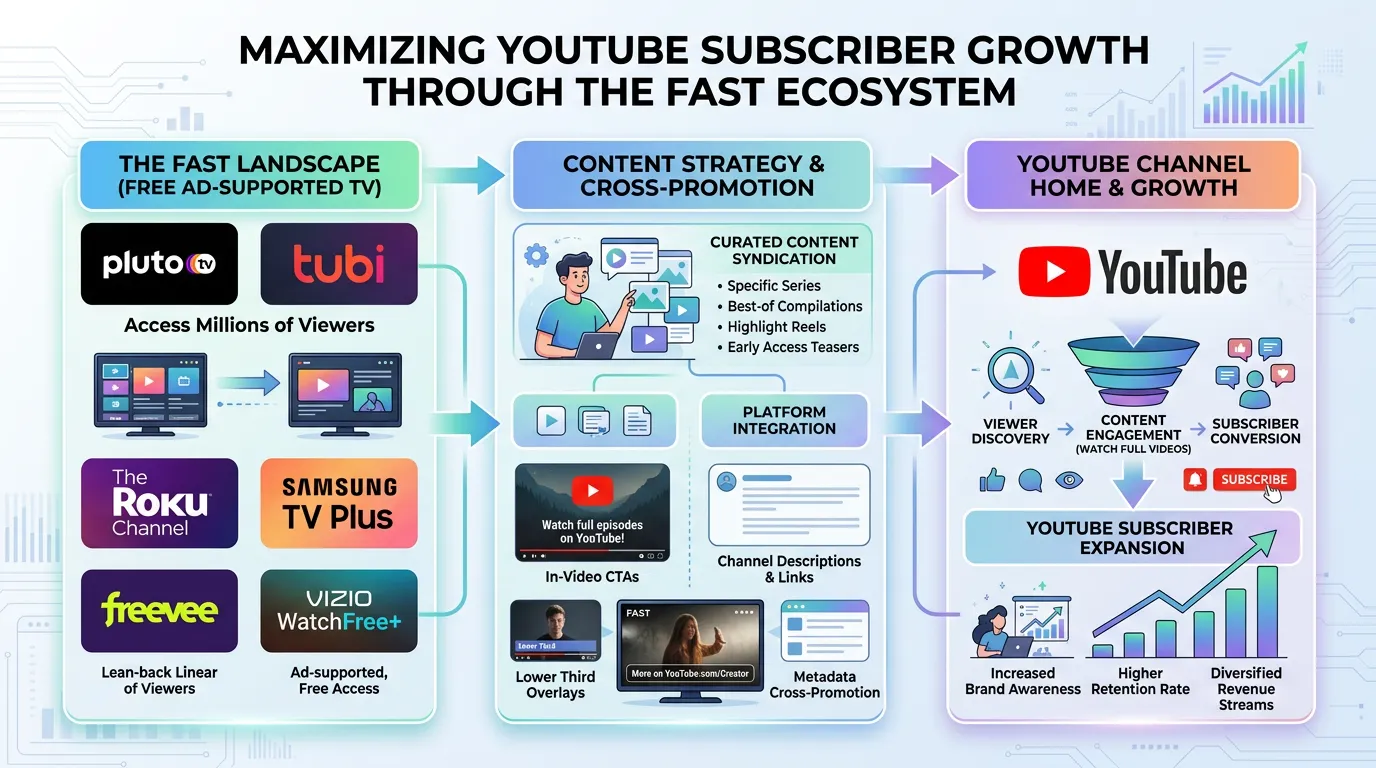
FAST platforms like Pluto TV, Tubi, Roku Channel, and Samsung TV Plus have experienced explosive growth, with the FAST market projected to reach $12 billion by 2027 according to industry analysts. This growth trajectory directly impacts YouTube content creators who are increasingly leveraging FAST distribution to accelerate subscriber acquisition and enhance their overall digital presence.
The FAST-YouTube Symbiosis
The relationship between FAST platforms and YouTube subscriber growth operates on multiple levels:
Cross-Platform Content Syndication: Publishers can repurpose YouTube content for FAST channels, creating additional touchpoints for audience discovery. When viewers discover content on FAST platforms, they often migrate to YouTube for more comprehensive content libraries, directly boosting subscriber numbers.
Enhanced Monetization Opportunities: FAST platforms typically offer higher CPMs (Cost Per Mille) compared to YouTube’s standard ad rates, providing creators with improved revenue streams that can be reinvested into content production and audience acquisition campaigns.
Demographic Expansion: FAST platforms attract different demographic segments than traditional YouTube audiences, particularly cord-cutters and older demographics who prefer lean-back viewing experiences similar to traditional television.
Strategic Implementation for Publishers
Content Optimization for FAST Distribution
Successful FAST-to-YouTube subscriber conversion requires strategic content planning and optimization:
Linear Programming Approach: Unlike YouTube’s on-demand model, FAST channels require linear programming schedules. Publishers must curate content that works effectively in scheduled time slots while maintaining viewer engagement throughout extended viewing sessions.
Quality Standards and Technical Requirements: FAST platforms typically enforce stricter technical standards than YouTube, including specific resolution requirements, audio standards, and content rating classifications. Meeting these standards often results in improved content quality that performs better across all distribution channels.
Metadata and Discovery Optimization: FAST platforms utilize different discovery algorithms compared to YouTube’s recommendation engine. Publishers must optimize metadata, thumbnails, and descriptions for both platforms while maintaining consistency in branding and messaging.
Audience Acquisition Strategies
Call-to-Action Integration: Strategic placement of YouTube channel promotions within FAST content can drive significant subscriber growth. This includes end-card promotions, verbal calls-to-action, and branded content that naturally directs viewers to YouTube for additional content.
Exclusive Content Teasers: Publishers can use FAST platforms to showcase previews or excerpts of exclusive YouTube content, creating incentives for viewers to subscribe to access complete content libraries.
Community Building: FAST platforms provide opportunities to reach audiences who may not actively search for content on YouTube but are receptive to discovering new channels through curated programming.
Programmatic Advertising Integration
The intersection of FAST platforms and YouTube subscriber growth is increasingly driven by sophisticated programmatic advertising strategies. Publishers and ad operations teams must understand how programmatic buying influences audience acquisition across both platforms.
Header Bidding Optimization
FAST platforms increasingly utilize header bidding technology to maximize ad revenue, which directly impacts content distribution and audience reach. Publishers leveraging video player solutions like Veedmo for their owned-and-operated properties can implement similar header bidding strategies to optimize ad inventory while maintaining viewer experience quality.
Real-Time Bidding Impact: Programmatic advertising on FAST platforms enables more precise audience targeting, allowing publishers to reach potential YouTube subscribers based on viewing behavior, demographic data, and content preferences.
Cross-Platform Retargeting: Advanced programmatic setups enable publishers to retarget FAST platform viewers with YouTube subscription campaigns, creating closed-loop audience acquisition funnels.
Ad Pod Strategies
FAST platforms typically utilize longer ad pods compared to YouTube’s shorter ad formats. This creates opportunities for more comprehensive brand messaging and subscriber acquisition campaigns:
Sequential Messaging: Publishers can create ad pod sequences that build subscriber acquisition arguments over multiple touchpoints within single viewing sessions.
Interactive Elements: Some FAST platforms support interactive advertising formats that can directly link to YouTube channels or specific video content, streamlining the subscriber conversion process.
Connected TV (CTV) and Audience Expansion
The rise of Connected TV viewing has fundamentally altered how audiences discover and engage with content across platforms. FAST channels distributed through CTV platforms create unique opportunities for YouTube subscriber growth:
Living Room Discovery
CTV viewing represents a shift toward communal content consumption, where family members or groups discover content together. This social viewing dynamic often leads to increased sharing and subscription activity as viewers seek to access discovered content on mobile devices through YouTube.
Multi-Screen Engagement
Modern viewing habits frequently involve second-screen activity, where viewers use mobile devices while watching CTV content. Publishers can leverage this behavior by encouraging real-time YouTube channel engagement during FAST program viewing.
Monetization Optimization Across Platforms
Revenue Stream Diversification
FAST platform integration provides publishers with diversified revenue streams that reduce dependence on YouTube’s monetization policies and algorithm changes:
Guaranteed Fill Rates: FAST platforms often provide more predictable ad fill rates compared to YouTube’s auction-based system, enabling better revenue forecasting and business planning.
Premium Advertising Opportunities: The television-like environment of FAST platforms attracts premium advertisers who may not typically invest in YouTube advertising, creating higher-value monetization opportunities.
Performance Measurement and Analytics
Cross-Platform Attribution: Advanced analytics setups enable publishers to track subscriber acquisition attribution across FAST and YouTube platforms, optimizing content distribution strategies based on performance data.
Lifetime Value Analysis: Understanding subscriber lifetime value across platforms helps publishers allocate resources effectively between FAST content production and direct YouTube content creation.
Technical Implementation Considerations
Video Ad Serving Technologies
FAST platforms utilize various video ad serving technologies that impact audience experience and subscriber conversion rates:
VAST (Video Ad Serving Template) Compliance: Ensuring VAST compliance across FAST and YouTube content enables consistent advertising experiences that don’t disrupt viewer engagement.
VMAP (Video Multiple Ad Playlist) Integration: Proper VMAP implementation allows for optimized ad placement that maximizes revenue while minimizing viewer disruption.
Content Management Workflows
Publishers must establish efficient workflows for managing content across FAST and YouTube platforms:
Automated Distribution: Implementing automated content distribution systems reduces manual effort while ensuring consistent branding and messaging across platforms.
Version Control: Managing different content versions optimized for each platform’s requirements while maintaining brand consistency requires robust content management systems.
Future Trends and Opportunities
Emerging Technologies
The convergence of FAST platforms and YouTube subscriber growth will be increasingly influenced by emerging technologies:
AI-Driven Content Curation: Machine learning algorithms will become more sophisticated in identifying optimal content distribution strategies across platforms.
Enhanced Interactive Features: Development of more interactive FAST platform features will create new opportunities for direct subscriber engagement and conversion.
Market Evolution
Increased Competition: As more publishers recognize FAST platform opportunities, competition for audience attention will intensify, requiring more sophisticated strategies for subscriber acquisition.
Platform Consolidation: Industry consolidation may create fewer but more powerful FAST platforms, requiring publishers to adapt their distribution strategies accordingly.
Conclusion
The intersection of FAST platforms and YouTube subscriber growth represents a significant opportunity for publishers and ad operations professionals to diversify their audience acquisition strategies while building more robust revenue streams. Success requires understanding the unique characteristics of each platform, implementing sophisticated cross-platform attribution systems, and maintaining consistent brand messaging across all distribution channels.
As the streaming landscape continues evolving, publishers who effectively leverage FAST platforms for YouTube subscriber growth will be better positioned to adapt to changing viewer preferences and monetization opportunities. The key lies in treating FAST and YouTube as complementary platforms within a comprehensive content distribution strategy rather than competing channels.
By implementing the strategies outlined in this analysis, publishers can harness the growing FAST ecosystem to accelerate YouTube subscriber acquisition while building sustainable, diversified digital media businesses that thrive across multiple platforms and revenue streams.