Video DSP: Complete Guide for Publishers and Ad Tech Professionals
In the rapidly evolving landscape of digital advertising, video demand-side platforms (DSPs) have emerged as critical infrastructure powering programmatic video advertising. For publishers and ad ops professionals, understanding how video DSPs function and integrate into the broader ad tech ecosystem is essential for maximizing revenue and delivering optimal user experiences.
What is a Video DSP?
A video demand-side platform (DSP) is a technology platform that enables advertisers and agencies to programmatically purchase video ad inventory across multiple ad exchanges, supply-side platforms (SSPs), and publisher networks. Unlike traditional DSPs that handle all digital ad formats, video DSPs are specifically optimized for the unique requirements of video advertising, including support for video ad standards like VAST, VPAID, and emerging protocols like SIMID.
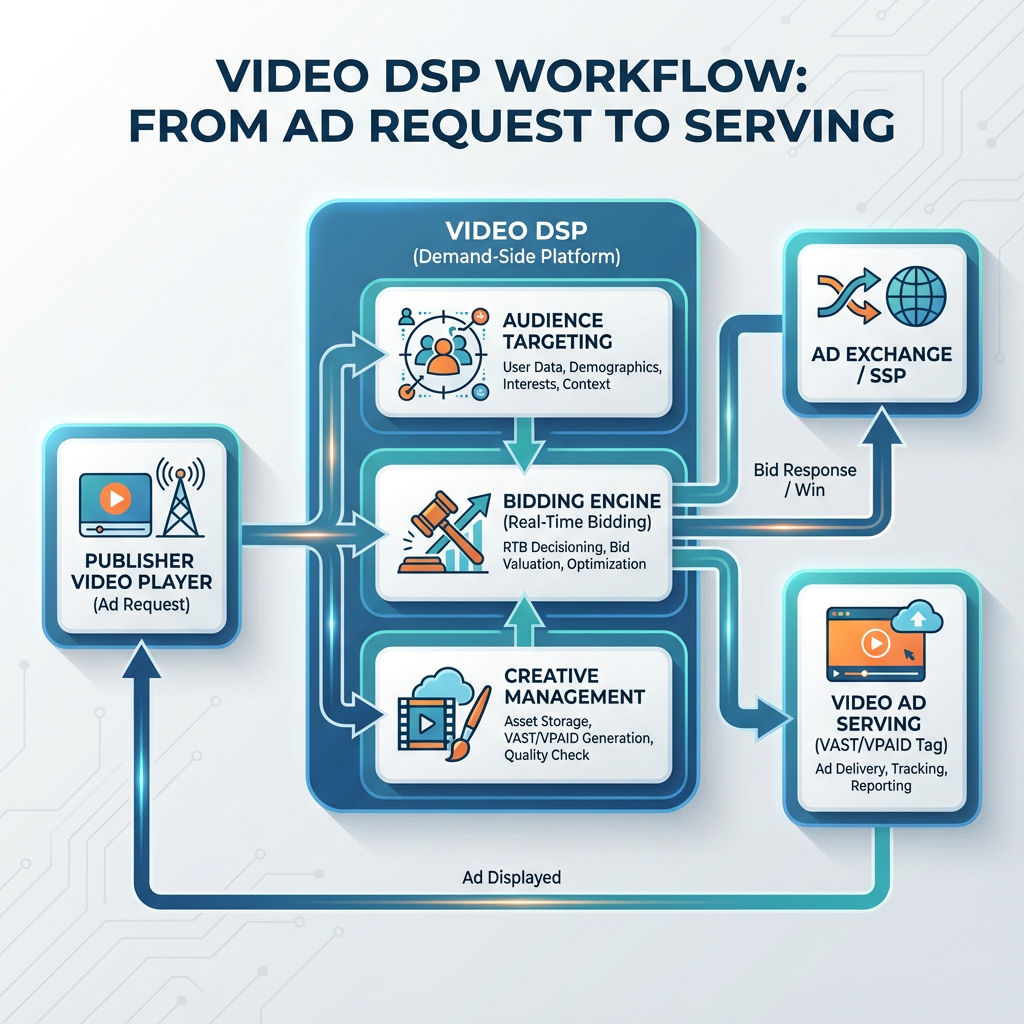
Video DSPs serve as the buyer-side counterpart to SSPs in the programmatic ecosystem. They aggregate video inventory from various sources, apply targeting parameters, execute real-time bidding decisions, and serve video creative assets to publishers’ video players. The sophistication of modern video DSPs extends far beyond simple buying mechanics, incorporating advanced audience targeting, creative optimization, frequency capping, and comprehensive reporting capabilities.
Core Components and Architecture
Bidding Engine
The heart of any video DSP is its bidding engine, which processes thousands of bid requests per second during real-time auctions. For video inventory, these engines must evaluate additional parameters compared to display advertising, including video duration, player size, content category, and supported video formats. Advanced video DSPs employ machine learning algorithms to optimize bidding strategies based on campaign performance data and audience insights.
Creative Management System
Video DSPs maintain sophisticated creative management systems capable of storing, transcoding, and serving video assets in multiple formats and resolutions. These systems must support various video codecs, aspect ratios, and file sizes to ensure compatibility across different publishers and devices. Integration with creative verification services helps prevent brand safety issues and ensures ad quality standards.
Audience and Data Integration
Modern video DSPs integrate with numerous data management platforms (DMPs) and customer data platforms (CDPs) to enable precise audience targeting. This includes first-party data from advertisers, third-party audience segments, and contextual targeting based on video content. The deprecation of third-party cookies has made these integrations increasingly complex, with video DSPs adapting to privacy-first targeting methods.
How Video DSPs Work in the Programmatic Ecosystem
Pre-Roll and Mid-Roll Auction Process
When a user initiates video playback on a publisher’s site, the video player generates an ad request containing available inventory information. This request flows through the programmatic supply chain, eventually reaching video DSPs via ad exchanges or SSPs. Video DSPs evaluate the opportunity against active campaigns, considering factors like audience match, video content context, and bid floor prices.
For pre-roll inventory, DSPs typically have 100-200 milliseconds to make bidding decisions before the video content begins. Mid-roll opportunities provide additional complexity, as DSPs must consider user engagement levels and the likelihood of completion. Advanced video DSPs use historical performance data and real-time signals to optimize these split-second decisions.
Ad Pod Management
In connected TV (CTV) and over-the-top (OTT) environments, video DSPs often encounter ad pod scenarios where multiple advertisements play consecutively. Managing ad pod placements requires sophisticated logic to optimize the sequence of ads, prevent competitive conflicts, and maximize overall campaign performance. Video DSPs coordinate with publishers to ensure seamless transitions between ads and maintain optimal user experiences.
Key Features and Capabilities
Advanced Video Targeting
Video DSPs offer targeting capabilities specifically designed for video advertising contexts. This includes targeting based on video content categories, viewer engagement patterns, device types, and viewing environments. For example, a video DSP might enable targeting users watching sports content on mobile devices during specific time periods, combining contextual and behavioral signals for precision targeting.
Cross-Device Campaign Management
Modern video DSPs excel at managing campaigns across multiple devices and platforms, from mobile apps to CTV environments. This requires maintaining consistent frequency caps, audience targeting, and creative optimization across disparate inventory sources. Advanced video DSPs use deterministic and probabilistic matching techniques to connect user interactions across devices.
Real-Time Creative Optimization
Sophisticated video DSPs incorporate dynamic creative optimization (DCO) capabilities, automatically selecting the most effective video creative variants based on audience characteristics, context, and performance data. This might involve choosing different video lengths, calls-to-action, or creative themes based on real-time optimization algorithms.
Integration with Video Ad Standards
VAST Compliance and Enhancement
Video Ad Serving Template (VAST) serves as the foundation for video DSP operations, providing standardized communication between ad servers and video players. Video DSPs must generate compliant VAST responses while supporting advanced features like companion ads, interactive overlays, and detailed tracking events. Many video DSPs extend basic VAST functionality with proprietary enhancements for improved measurement and user interaction.
VPAID Support and Considerations
Video Player-Ad Interface Definition (VPAID) support enables interactive video advertisements but introduces complexity for video DSP operations. DSPs must validate VPAID creative assets, ensure compatibility across different video players, and manage the increased technical overhead. As the industry moves toward more secure alternatives, many video DSPs are transitioning VPAID workflows to SIMID implementations.
VMAP Integration for Long-Form Content
Video Multiple Ad Playlist (VMAP) integration allows video DSPs to coordinate advertising across long-form video content, defining when ads should appear throughout a video stream. This is particularly important for CTV and streaming environments where video DSPs must work with publishers to optimize ad placement timing and frequency.
Publisher Integration Considerations
Header Bidding Implementation
Many publishers integrate video DSPs through header bidding solutions like Prebid.js, enabling client-side competition between multiple demand sources. Video header bidding requires careful implementation to prevent latency issues that could impact video playback experiences. Publishers must configure appropriate timeouts, fallback mechanisms, and creative caching strategies when working with video DSPs.
Server-Side Integration
For high-volume publishers or those prioritizing page speed optimization, server-side video DSP integration offers advantages. This approach moves auction logic to server environments, reducing client-side complexity but requiring robust backend infrastructure. Publishers using solutions like Veedmo for video delivery often prefer server-side integrations to maintain optimal playback performance.
Revenue Optimization Strategies
Publishers can maximize video DSP effectiveness through strategic implementation approaches. This includes setting appropriate floor prices, optimizing ad pod configurations, and providing rich contextual data to improve targeting accuracy. Regular analysis of fill rates, eCPM performance, and user experience metrics helps publishers fine-tune their video DSP partnerships.
Challenges and Solutions
Latency Management
Video advertising demands strict latency requirements to prevent user experience degradation. Video DSPs must optimize their bidding processes, creative serving, and tracking implementations to minimize delays in video content delivery. This often involves edge computing deployments, creative pre-caching, and streamlined auction mechanics.
Brand Safety and Content Verification
Video DSPs face unique brand safety challenges, as video content provides rich contextual environments that require sophisticated analysis. Integration with content verification services, keyword blocking, and manual review processes help ensure advertiser content appears in appropriate contexts. Machine learning algorithms increasingly automate these verification processes while maintaining accuracy.
Privacy Compliance
Evolving privacy regulations like GDPR and CCPA significantly impact video DSP operations. These platforms must implement consent management, data processing controls, and user preference systems while maintaining targeting effectiveness. The transition away from third-party cookies requires video DSPs to develop alternative identification and targeting methodologies.
Future Trends and Developments
Connected TV Expansion
The rapid growth of CTV and streaming services creates significant opportunities for video DSPs. These environments offer premium inventory, engaged audiences, and household-level targeting capabilities. Video DSPs are developing specialized CTV features, including advanced audience matching, cross-screen measurement, and integration with streaming platform APIs.
AI and Machine Learning Integration
Artificial intelligence increasingly powers video DSP optimization, from bidding algorithms to creative selection and audience prediction. Machine learning models analyze vast datasets to identify patterns in user behavior, content preferences, and campaign performance, enabling more sophisticated targeting and optimization strategies.
Privacy-First Advertising
As the industry transitions to privacy-first advertising models, video DSPs are developing new targeting and measurement approaches. This includes first-party data activation, contextual targeting enhancements, and privacy-preserving audience matching techniques that maintain effectiveness while respecting user privacy preferences.
Best Practices for Publishers
Implementation Strategy
- Diversify Demand Sources: Work with multiple video DSPs to maximize competition and fill rates
- Optimize Ad Placement: Experiment with pre-roll, mid-roll, and post-roll positioning based on content types
- Monitor Performance Metrics: Track eCPM, viewability, completion rates, and user engagement impacts
- Maintain Technical Standards: Ensure video player compatibility with major video ad standards
- Regular Testing: Conduct ongoing A/B tests for ad formats, frequencies, and integration methods
Revenue Optimization
Successful video DSP partnerships require ongoing optimization and performance monitoring. Publishers should establish clear KPIs, implement comprehensive analytics, and maintain open communication channels with video DSP partners. Regular review of campaign performance, audience insights, and technical integration status ensures optimal results for both publishers and advertisers.
Conclusion
Video DSPs represent a critical component of the modern programmatic advertising ecosystem, enabling sophisticated video campaign management and optimization. For publishers and ad ops professionals, understanding video DSP capabilities, integration requirements, and optimization strategies is essential for maximizing video advertising revenue while maintaining positive user experiences.
As the digital video landscape continues evolving with new formats, devices, and privacy requirements, video DSPs will adapt and innovate to meet changing market needs. Publishers who invest in understanding these technologies and implementing best practices will be well-positioned to capitalize on the continued growth of programmatic video advertising.