CTV Advertising: The Complete Guide for Publishers and Ad Ops in 2024
Connected TV (CTV) advertising has fundamentally transformed the digital advertising landscape, creating unprecedented opportunities for publishers while presenting unique technical and operational challenges. As traditional linear TV viewership continues to decline and streaming consumption accelerates, understanding CTV advertising has become essential for publishers and ad operations professionals.
What is Connected TV Advertising?
Connected TV advertising refers to the delivery of video advertisements through internet-connected television devices and streaming platforms. Unlike traditional broadcast television, CTV enables programmatic ad buying, precise audience targeting, and real-time campaign optimization. This advertising method bridges the gap between the premium viewing experience of television and the sophisticated targeting capabilities of digital advertising.
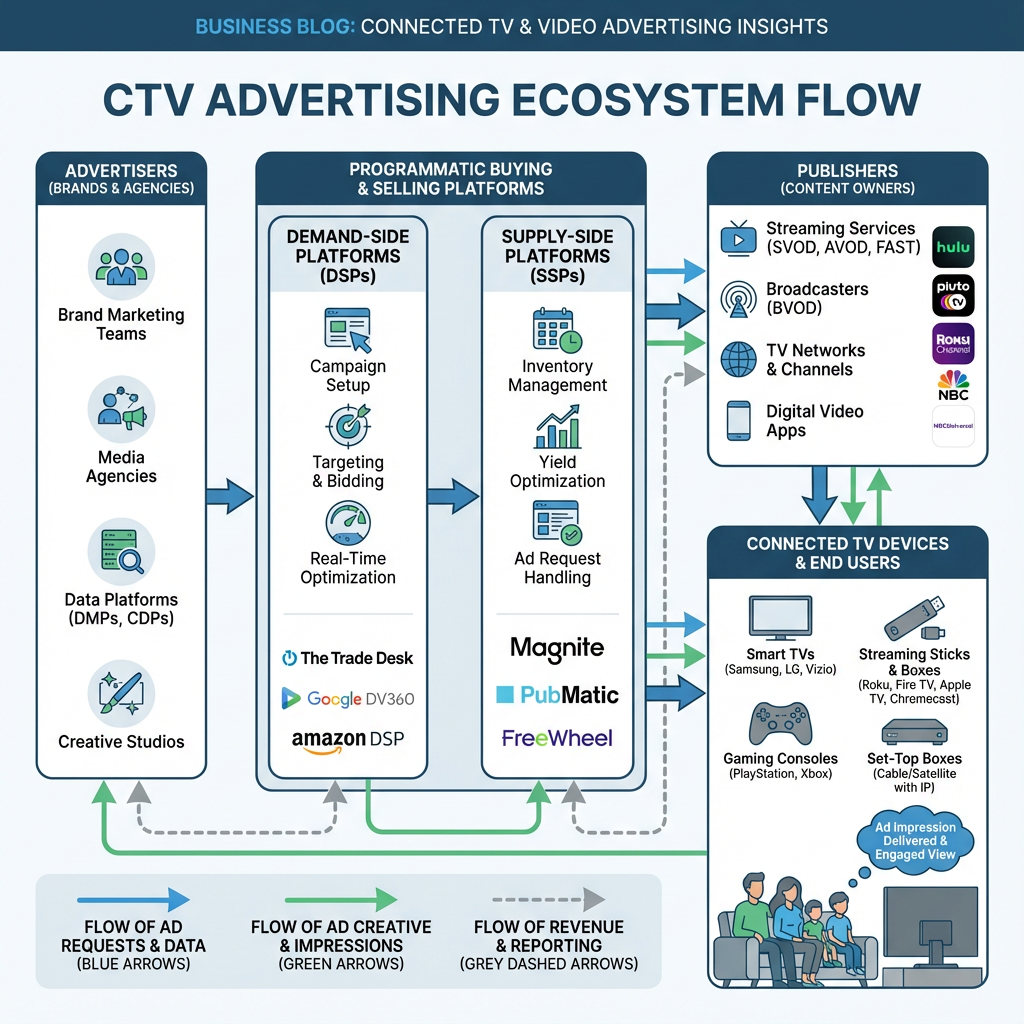
CTV encompasses various devices and platforms including smart TVs, streaming devices (Roku, Amazon Fire TV, Apple TV), gaming consoles, and mobile devices when used for streaming content to televisions. The ecosystem includes both ad-supported video on demand (AVOD) services and live streaming platforms.
The CTV Advertising Ecosystem
Supply-Side Participants
Publishers in the CTV space range from major streaming services to independent content creators. Premium publishers like Hulu, Paramount+, and NBC’s Peacock command high CPMs due to their professional content and large audiences. However, opportunities exist for smaller publishers through aggregation platforms and specialized CTV ad networks.
Demand-Side Infrastructure
Advertisers access CTV inventory through demand-side platforms (DSPs) specifically designed for video advertising. These platforms handle the complex technical requirements of video ad serving, including multiple format support, device compatibility, and real-time bidding optimization.
Technology Stack Components
The CTV advertising technology stack includes several critical components:
- Video Ad Servers: Handle ad delivery, tracking, and reporting
- Supply-Side Platforms (SSPs): Manage inventory optimization and yield management
- Data Management Platforms (DMPs): Enable audience segmentation and targeting
- Content Delivery Networks (CDNs): Ensure high-quality video delivery
- Measurement and Analytics Platforms: Provide campaign performance insights
CTV Ad Formats and Specifications
Pre-Roll Advertisements
Pre-roll ads appear before content begins and typically range from 15 to 30 seconds. These placements achieve high completion rates due to viewers’ intent to watch the subsequent content. Publishers should optimize pre-roll inventory by implementing frequency capping and ensuring seamless transitions between ads and content.
Mid-Roll Advertisement Integration
Mid-roll ads interrupt content at natural break points, mimicking traditional television commercial breaks. Strategic placement requires careful consideration of content flow and viewer experience. Publishers with longer-form content (30+ minutes) can implement multiple mid-roll breaks to maximize revenue while maintaining viewer satisfaction.
Post-Roll Opportunities
Post-roll ads play after content completion and generally achieve lower engagement rates. However, they provide additional inventory for publishers without interrupting the primary viewing experience. These placements work particularly well for series content where automatic play-next functionality maintains viewer attention.
Interactive and Shoppable Formats
Emerging interactive CTV formats enable viewer engagement through remote control interactions or companion mobile experiences. These formats command premium pricing but require sophisticated technical implementation and careful creative guidelines.
Targeting Capabilities in CTV Advertising
Demographic and Geographic Targeting
CTV platforms provide robust demographic targeting based on device registration data and viewing behavior analysis. Geographic targeting reaches neighborhood-level precision, enabling local advertisers to compete effectively with national brands. Publishers can maximize yield by offering hyperlocal inventory packages to regional advertisers.
Behavioral and Interest-Based Segmentation
Viewing history analysis enables sophisticated audience segmentation based on content preferences, viewing patterns, and engagement metrics. Publishers can create valuable audience segments by analyzing their unique viewership data and offering these insights to advertisers.
Household-Level Targeting
Unlike mobile or desktop advertising, CTV targeting often operates at the household level rather than individual user level. This approach respects privacy while enabling effective reach and frequency management across all household members.
Cross-Device Identity Resolution
Advanced CTV advertising implementations connect television viewing with mobile and desktop activity through deterministic and probabilistic matching. This capability enables attribution measurement and sequential messaging across devices.
Technical Implementation for Publishers
Video Player Requirements
Successful CTV advertising requires robust video player technology capable of handling multiple ad formats, device compatibility, and real-time decisioning. Publishers should evaluate player solutions that support VAST/VPAID standards, provide comprehensive analytics, and offer seamless user experiences. Modern video player solutions like Veedmo provide publishers with the technical foundation necessary for effective CTV advertising implementation.
Programmatic Integration
Implementing programmatic CTV advertising requires integration with multiple SSPs and ad exchanges. Publishers should establish connections with CTV-focused platforms while maintaining relationships with traditional display partners expanding into video.
Quality Assurance Protocols
CTV advertising demands rigorous quality assurance processes to prevent technical issues that could disrupt viewer experience. Publishers should implement automated testing systems that verify ad compatibility across different devices and network conditions.
Performance Monitoring Systems
Real-time monitoring capabilities enable publishers to identify and resolve technical issues quickly. Key metrics include ad completion rates, error frequencies, buffering incidents, and device-specific performance variations.
Monetization Strategies for Publishers
Direct Sales Approaches
Direct advertising sales often generate higher CPMs than programmatic channels, particularly for publishers with unique audiences or premium content. Building direct relationships with advertisers requires dedicated sales resources but provides greater revenue control and advertiser relationship development.
Programmatic Optimization
Programmatic CTV advertising requires sophisticated yield management strategies. Publishers should implement header bidding solutions specifically designed for video advertising and establish competitive pressure among demand sources.
Subscription and Advertising Hybrid Models
Many successful CTV publishers implement hybrid monetization combining subscription revenue with advertising. This approach reduces advertiser dependency while providing subscribers with lower-cost access options.
Data Monetization Opportunities
Publisher-owned audience data represents significant value in CTV advertising. First-party data partnerships with advertisers and data licensing agreements can generate additional revenue streams beyond traditional advertising.
Measurement and Attribution
Campaign Performance Metrics
CTV advertising measurement extends beyond traditional digital metrics to include brand awareness, purchase intent, and offline attribution. Publishers should provide advertisers with comprehensive reporting that demonstrates campaign effectiveness across multiple dimensions.
Cross-Platform Attribution
Measuring CTV advertising impact on mobile and desktop conversions requires sophisticated attribution modeling. Publishers can differentiate their offerings by providing advertisers with cross-platform measurement capabilities.
Privacy-Compliant Measurement
Evolution toward privacy-first measurement approaches requires publishers to implement solutions that provide advertiser insights while protecting viewer privacy. Aggregated reporting and cohort analysis methods maintain measurement effectiveness under privacy constraints.
Challenges and Solutions
Fragmentation Across Platforms
The CTV ecosystem’s fragmentation across devices, operating systems, and streaming platforms creates technical complexity for publishers. Standardizing ad implementation across platforms while maintaining device-specific optimizations requires careful technical planning.
Ad Fraud Prevention
CTV advertising faces unique fraud challenges including device spoofing and invalid traffic. Publishers should implement comprehensive fraud detection systems and maintain partnerships with third-party verification services.
Inventory Management Complexity
Balancing direct sales commitments with programmatic opportunities while optimizing for revenue requires sophisticated inventory management. Publishers need forecasting systems that account for viewing pattern variations and seasonal content changes.
Technical Infrastructure Requirements
CTV advertising demands significant technical infrastructure investment including content delivery networks, ad serving capabilities, and analytics platforms. Publishers should evaluate build-versus-buy decisions based on their scale and technical resources.
Future Trends and Opportunities
Advanced Audience Segmentation
Machine learning applications in audience analysis will enable more sophisticated segmentation based on content engagement patterns, viewing context, and cross-platform behavior. Publishers investing in data science capabilities will gain competitive advantages.
Interactive and Immersive Formats
Emerging ad formats including augmented reality overlays, voice-activated responses, and gamified experiences will create new revenue opportunities for technically capable publishers.
Privacy-First Solutions
Development of privacy-preserving targeting and measurement solutions will reshape CTV advertising technical requirements. Publishers should prepare for cookie-less and identifier-reduced advertising environments.
Programmatic Audio Integration
Integration of audio advertising with video content creates additional inventory opportunities for publishers with music or podcast content adjacent to their video offerings.
Implementation Best Practices
Revenue Optimization
Successful CTV advertising implementation requires continuous optimization across multiple dimensions. Publishers should establish A/B testing protocols for ad placement, frequency capping, and creative rotation to maximize both revenue and viewer satisfaction.
Advertiser Relationship Management
Building lasting advertiser relationships requires transparency in reporting, consistent inventory quality, and proactive communication about performance optimization opportunities.
Technology Partner Selection
Choosing the right technology partners significantly impacts CTV advertising success. Publishers should evaluate partners based on technical capabilities, integration complexity, support quality, and roadmap alignment with industry trends.
Viewer Experience Balance
Maintaining viewer satisfaction while maximizing advertising revenue requires careful balance of ad frequency, placement timing, and creative quality standards. Publishers should establish viewer experience metrics alongside revenue metrics.
Connected TV advertising represents a fundamental shift in video advertising, combining television’s premium viewing experience with digital advertising’s targeting precision and measurement capabilities. Success requires technical expertise, strategic planning, and continuous optimization across multiple operational dimensions. Publishers who master CTV advertising implementation position themselves for sustained growth as streaming consumption continues expanding and advertiser investment in CTV accelerates.