FAST TV: The Complete Guide for Publishers to Free Ad-Supported Television
Free Ad-Supported Television (FAST) has emerged as one of the most significant growth opportunities in the streaming ecosystem, offering publishers and content creators a new revenue stream while providing viewers with premium content at no cost. As traditional cable subscriptions continue to decline and streaming services proliferate, FAST TV represents a compelling middle ground that combines the accessibility of free content with the monetization potential of targeted advertising.
What is FAST TV?
FAST TV refers to streaming television services that offer linear programming channels supported entirely by advertising revenue, requiring no subscription fees from viewers. Unlike Video on Demand (VOD) services, FAST channels operate more like traditional television with scheduled programming, but delivered over internet protocols rather than broadcast or cable infrastructure.
The FAST model has gained tremendous traction because it addresses key pain points in the current streaming landscape: subscription fatigue among consumers and the need for sustainable monetization models for content creators. Major platforms like Pluto TV, Tubi, and Samsung TV Plus have demonstrated the viability of this approach, collectively reaching hundreds of millions of viewers globally.
Key Characteristics of FAST Channels
- Linear Programming: Content follows a predetermined schedule, similar to traditional TV
- Ad-Supported: Revenue generated exclusively through advertising
- Free Access: No subscription or payment required from viewers
- On-Demand Elements: Some platforms combine FAST with VOD offerings
- Targeted Advertising: Leverages digital advertising capabilities for precise audience targeting
The FAST TV Ecosystem
Major FAST Platforms
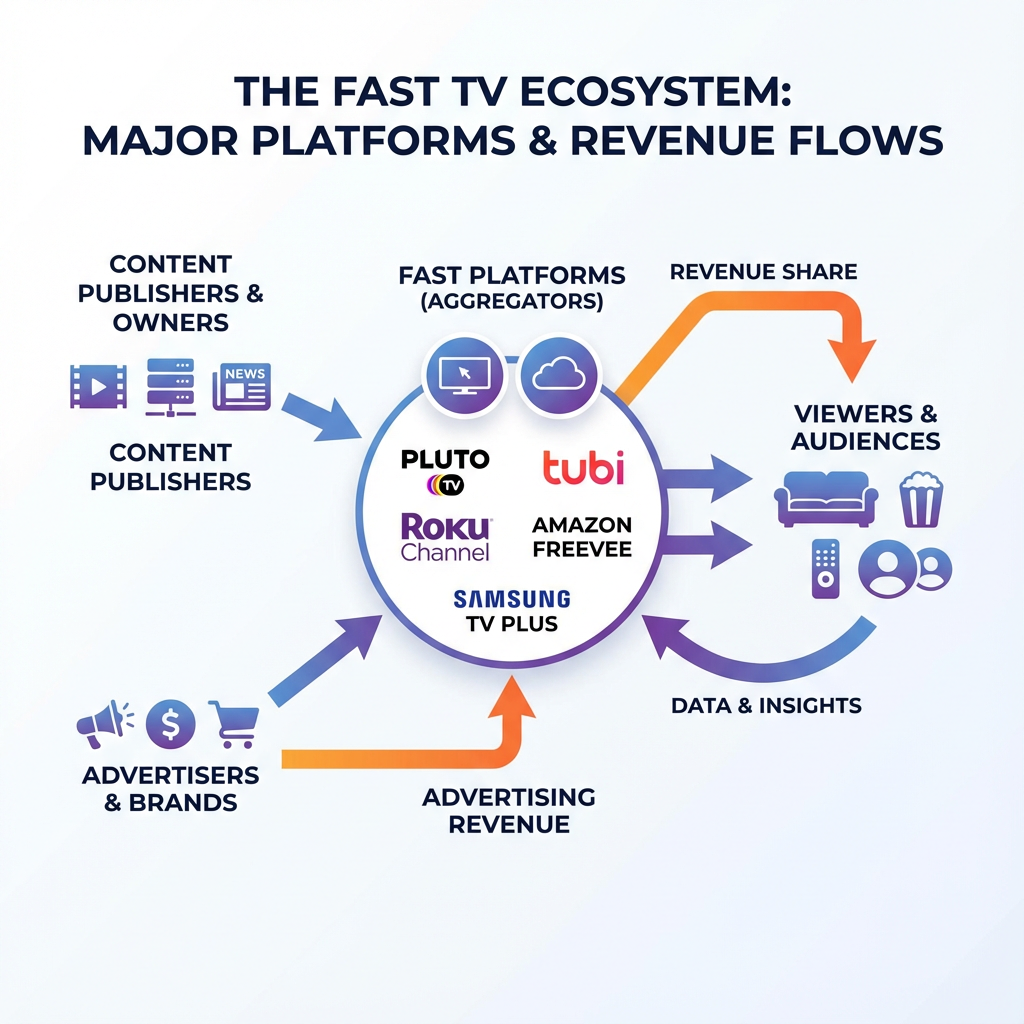
The FAST ecosystem consists of several types of platforms, each offering different opportunities for publishers:
Aggregator Platforms: Services like Pluto TV (ViacomCBS), Tubi (Fox), and Crackle aggregate content from multiple sources, creating themed channels around specific genres, topics, or content libraries.
Device Manufacturer Platforms: Companies like Samsung (Samsung TV Plus), LG (LG Channels), and Roku (The Roku Channel) leverage their hardware presence to create integrated FAST experiences.
Publisher-Direct Platforms: Content owners like CBS News, Bloomberg, and various digital publishers create their own branded FAST channels to distribute content directly to viewers.
Revenue Models
FAST TV operates on several revenue-sharing models that publishers should understand:
- Revenue Sharing: Platforms typically retain 30-50% of advertising revenue, with the remainder going to content providers
- Fixed CPM Rates: Some platforms offer guaranteed minimum rates per thousand impressions
- Hybrid Models: Combination of revenue sharing and performance bonuses based on viewership metrics
- Direct Sales: Publishers maintaining their own FAST channels can sell advertising inventory directly
Technical Infrastructure for FAST TV
Streaming Technology Requirements
Launching a successful FAST channel requires robust technical infrastructure:
Content Delivery Network (CDN): Essential for ensuring reliable, low-latency streaming to global audiences. Major CDN providers like AWS CloudFront, Cloudflare, and Akamai offer specialized solutions for live streaming.
Video Encoding and Transcoding: FAST channels must support multiple bitrates and resolutions to accommodate varying internet connection speeds and device capabilities. Adaptive bitrate streaming (ABR) technology ensures optimal viewing experiences across different conditions.
Ad Insertion Technology: Server-Side Ad Insertion (SSAI) is crucial for FAST operations, enabling dynamic ad placement while maintaining stream continuity. This technology prevents ad blockers from interfering with monetization and provides a seamless viewing experience.
Video Management Systems: Publishers need comprehensive video management platforms to handle content scheduling, metadata management, and analytics. Solutions like Veedmo offer publishers the infrastructure needed to manage video content across multiple distribution channels, including FAST platforms.
Content Management and Scheduling
FAST channels require sophisticated content management systems capable of:
- Automated Scheduling: Creating and managing programming schedules across multiple time zones
- Content Rotation: Efficiently cycling through content libraries to maximize engagement
- Metadata Management: Organizing content with detailed metadata for discoverability and targeting
- Rights Management: Tracking content licensing agreements and geographical restrictions
Monetization Strategies for Publishers
Advertising Formats in FAST TV
FAST TV supports various advertising formats, each offering different revenue potential:
Pre-Roll Advertising: Traditional video ads that play before content begins, typically 15-30 seconds in length.
Mid-Roll Advertising: Ads inserted during natural content breaks, offering higher engagement rates due to viewer investment in the content.
Interactive Advertising: Advanced formats including shoppable ads, polls, and clickable overlays that drive higher engagement and CPM rates.
Sponsored Content: Brand integration and sponsored segments that blend naturally with programming content.
Audience Development and Retention
Successful FAST monetization depends heavily on building and maintaining engaged audiences:
Content Curation: Developing themed channels with consistent content that appeals to specific demographics or interest groups.
Programming Strategy: Creating appointment viewing through premiere schedules, special events, and exclusive content windows.
Cross-Platform Promotion: Leveraging social media, email marketing, and other owned channels to drive FAST viewership.
Data-Driven Programming: Using analytics to optimize content scheduling based on audience behavior patterns.
Best Practices for FAST Channel Success
Content Strategy
Developing compelling FAST content requires understanding the unique viewing behaviors associated with free streaming:
Binge-Friendly Programming: While FAST is linear, viewers often discover channels mid-stream, so content should be accessible to new viewers at any point.
Consistent Theming: Successful FAST channels maintain clear brand identity and content themes that viewers can easily understand and return to.
Seasonal Programming: Adapting content schedules to align with seasonal interests, holidays, and cultural events maximizes engagement.
Archive Utilization: FAST provides an excellent opportunity to monetize existing content libraries that may have completed their primary distribution windows.
Technical Optimization
Stream Quality: Maintaining consistent, high-quality streams is essential for viewer retention and advertiser satisfaction.
Load Testing: Regular testing ensures infrastructure can handle traffic spikes during popular programming or viral content moments.
Analytics Integration: Comprehensive analytics tracking enables optimization of both content performance and advertising effectiveness.
Mobile Optimization: With significant FAST viewing occurring on mobile devices, ensuring optimal mobile experiences is crucial.
Challenges and Solutions in FAST TV
Content Licensing Complexities
FAST distribution often involves complex licensing considerations:
Geographic Restrictions: Content rights may vary by territory, requiring geo-blocking capabilities and region-specific programming.
Windowing Agreements: Balancing FAST distribution with existing premium distribution agreements requires careful planning and negotiation.
Music Licensing: FAST channels must ensure proper music licensing for all content, which can be particularly complex for user-generated content.
Competition and Discovery
The growing FAST ecosystem presents both opportunities and challenges:
Platform Relationships: Building strong relationships with major FAST platforms is essential for distribution and promotion.
Content Differentiation: Standing out in an increasingly crowded marketplace requires unique content strategies and strong brand positioning.
Discovery Optimization: Understanding each platform’s discovery algorithms and optimization strategies maximizes channel visibility.
Future Trends in FAST TV
Technological Advancements
Several emerging technologies will shape the future of FAST TV:
Artificial Intelligence: AI-driven content recommendations and automated scheduling will improve both viewer experience and operational efficiency.
Advanced Analytics: More sophisticated audience measurement and attribution will enable better advertiser targeting and higher CPM rates.
Interactive Features: Enhanced interactivity, including live polling, social integration, and e-commerce features, will create new revenue opportunities.
Market Evolution
The FAST TV market continues to evolve rapidly:
Premium Content Migration: High-quality content previously exclusive to subscription services is increasingly appearing on FAST platforms.
Global Expansion: International expansion of major FAST platforms creates new opportunities for publishers to reach global audiences.
Advertiser Adoption: Growing advertiser confidence in FAST TV is driving higher investment and more competitive CPM rates.
Getting Started with FAST TV
Assessment and Planning
Publishers considering FAST TV should begin with comprehensive assessment:
Content Audit: Evaluate existing content libraries for FAST suitability, considering both quality and licensing restrictions.
Technical Readiness: Assess current technical infrastructure and identify necessary upgrades or investments.
Market Analysis: Research target audiences, competitive landscape, and platform opportunities.
Business Model Planning: Develop clear revenue projections and success metrics for FAST initiatives.
Implementation Strategy
Successful FAST channel launches require systematic implementation:
Platform Selection: Choose initial platforms based on audience alignment, revenue potential, and technical requirements.
Pilot Programming: Start with limited content to test audience response and optimize operations before full-scale launch.
Performance Monitoring: Establish comprehensive analytics and reporting systems to track key performance indicators.
Scaling Strategy: Develop plans for expanding successful FAST initiatives across additional platforms and content categories.
FAST TV represents a significant opportunity for publishers to monetize content while serving audiences seeking free, high-quality entertainment. Success requires understanding the technical requirements, developing appropriate content strategies, and maintaining focus on audience engagement and advertiser value. As the ecosystem continues to mature, early adopters who establish strong FAST presence will be well-positioned to benefit from this growing segment of the streaming economy.