Outstream Video Ads: Complete Guide for Publishers and Revenue Optimization
Outstream video advertising has emerged as one of the most promising revenue opportunities for digital publishers. Unlike traditional video ads that require dedicated video content, outstream ads create their own video inventory, making them accessible to publishers who don’t have extensive video libraries. This comprehensive guide covers everything publishers and ad operations professionals need to know about implementing and optimizing outstream video ads.
What Are Outstream Video Ads?
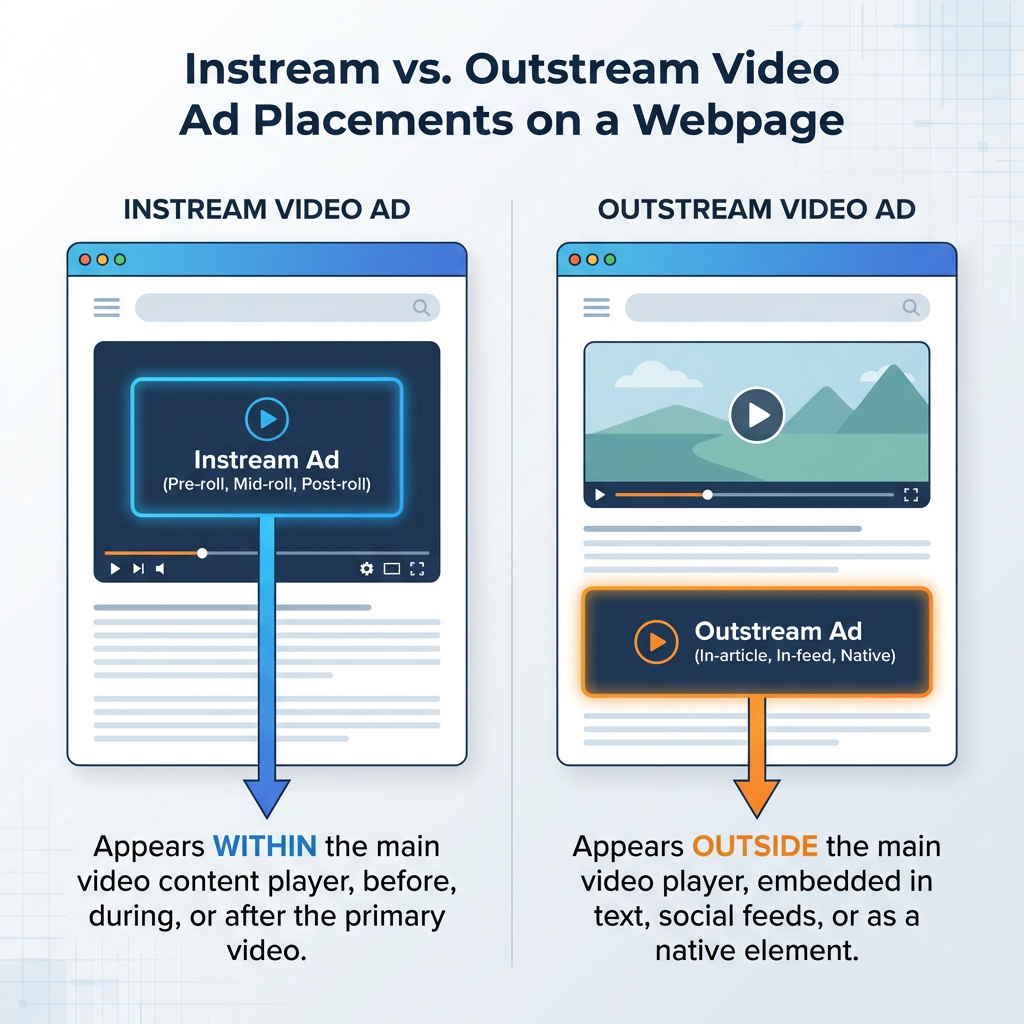
Outstream video ads are standalone video advertisements that don’t require pre-existing video content to display. They appear within editorial content, typically as in-article placements, in-feed units, or banner replacements. These ads automatically play when they enter the viewport and pause when they exit, providing a user-friendly experience while generating substantial revenue for publishers.
The key distinction lies in their independence from video content. While instream ads (pre-roll, mid-roll, post-roll) require video players and content, outstream ads create their own viewing experience within the webpage’s existing layout.
Key Characteristics of Outstream Video Ads
- Self-contained: No existing video content required
- Responsive: Adapt to various screen sizes and placements
- Non-intrusive: Typically muted by default with user-initiated audio
- Viewability-focused: Only play when visible to users
- High CPMs: Command premium rates compared to display ads
Benefits for Publishers
Revenue Diversification
Outstream video ads provide publishers with access to video advertising budgets without requiring video content creation. This opens up a significant revenue stream that was previously unavailable to text-focused publications.
Higher CPMs
Video advertising consistently commands higher CPMs than traditional display ads. Publishers typically see 3-5x higher revenue per impression with outstream video compared to standard banner ads.
Improved User Experience
When implemented correctly, outstream ads enhance rather than disrupt the user experience. They’re designed to be less intrusive than pop-ups or interstitials while still capturing user attention.
Flexible Implementation
Outstream ads can be placed in multiple locations:
- Between article paragraphs
- Within social media feeds
- As sticky units that follow users
- Replacing traditional banner positions
Implementation Strategies
Technical Requirements
Implementing outstream video ads requires specific technical considerations:
VAST Compliance
Most outstream video ads use Video Ad Serving Template (VAST) tags for delivery. Publishers need video players capable of parsing VAST responses and handling video ad playback. Modern outstream solutions like Veedmo provide comprehensive video player technology that seamlessly integrates with publisher websites while supporting industry-standard ad formats.
Responsive Design
Outstream units must adapt to different screen sizes and orientations. This requires:
- Flexible aspect ratios
- Mobile-optimized controls
- Bandwidth-aware streaming
- Touch-friendly interfaces
Placement Optimization
In-Article Placements
The most effective outstream placements occur within editorial content, typically after 2-3 paragraphs. This positioning ensures:
- High viewability rates
- Natural content flow
- Maximum user engagement
Feed Integration
For publishers with social media-style feeds, outstream ads can appear as native content units. This approach requires careful labeling to maintain transparency while maximizing engagement.
Sticky and Floating Units
Sticky outstream ads that follow users as they scroll can increase viewability and completion rates. However, these must be implemented carefully to avoid user experience issues.
Programmatic Integration
Header Bidding Implementation
Integrating outstream video ads with header bidding setups requires specific adapter configurations. Publishers should:
- Configure video-specific bid adapters: Many demand partners offer dedicated outstream inventory
- Set appropriate floor prices: Video inventory typically commands higher floors than display
- Implement proper targeting: Video ads often have specific demographic and contextual requirements
Prebid.js Configuration
For publishers using Prebid.js, outstream video implementation involves:
var videoAdUnit = {
    code: 'outstream-video-div',
    mediaTypes: {
        video: {
            context: 'outstream',
            playerSize: [640, 480],
            mimes: ['video/mp4'],
            protocols: [2, 3, 5, 6],
            playbackmethod: [2],
            skip: 0
        }
    },
    bids: [{
        bidder: 'example',
        params: {
            placementId: '12345'
        }
    }]
};
Real-Time Bidding Optimization
Outstream video ads benefit from real-time bidding optimization through:
- Dynamic floor pricing: Adjusting minimum bids based on performance data
- Audience targeting: Leveraging first-party data for premium inventory
- Contextual relevance: Matching ad content to editorial context
Monetization Best Practices
Frequency Capping
To maintain positive user experience while maximizing revenue:
- Limit outstream ads to 1-2 per page view
- Implement session-based frequency caps
- Use progressive capping for return visitors
Performance Monitoring
Key metrics to track include:
- Viewability rates: Target 70%+ viewable impressions
- Completion rates: Monitor 25%, 50%, 75%, and 100% completion
- Click-through rates: Track user engagement levels
- Revenue per session: Measure overall monetization impact
A/B Testing Strategies
Placement Testing
Test different outstream ad positions to optimize performance:
- Compare in-article vs. end-of-article placements
- Test different paragraph intervals
- Evaluate sticky vs. static implementations
Size and Format Testing
Experiment with various video dimensions:
- 16:9 landscape for desktop
- 9:16 portrait for mobile
- Square formats for social feed integration
Ad Serving Considerations
Latency Management
Outstream video ads can impact page load times. Optimize through:
- Lazy loading: Only load ads when they enter the viewport
- Preloading strategies: Cache video content intelligently
- CDN optimization: Use geographically distributed content delivery
Quality Control
Implement robust quality controls:
- Brand safety: Use contextual scanning to avoid inappropriate placements
- Ad verification: Partner with third-party verification providers
- Creative review: Establish approval processes for video content
Mobile Optimization
Responsive Video Players
Mobile outstream ads require special consideration:
- Touch-optimized controls
- Bandwidth-aware streaming
- Battery usage optimization
- Portrait orientation support
iOS and Android Considerations
Different mobile platforms have varying requirements:
- iOS: Respect silent switch preferences
- Android: Handle varied screen densities
- Both: Implement proper fullscreen capabilities
Future Trends and Developments
Interactive Outstream Ads
Emerging formats include:
- Shoppable video experiences
- Interactive hotspots within video content
- Augmented reality integration
- Social sharing capabilities
Advanced Targeting
Next-generation outstream ads will leverage:
- Machine learning: Predictive audience modeling
- Real-time personalization: Dynamic creative optimization
- Cross-device tracking: Unified user journey measurement
- Privacy-first solutions: Cookieless targeting methodologies
Common Implementation Challenges
Technical Issues
Video Player Conflicts
Multiple video players on a page can cause conflicts. Solutions include:
- Implementing player management systems
- Using unified video player libraries
- Coordinating autoplay policies
Ad Blocking
Outstream ads face ad blocking challenges:
- Server-side ad insertion
- Native content integration
- User value propositions
User Experience Balance
Maintaining positive UX while maximizing revenue requires:
- Careful placement: Avoid disrupting content flow
- Volume controls: Respect user preferences
- Skip options: Provide user control when appropriate
Measuring Success
Revenue Metrics
- eCPM: Effective cost per mille
- Fill rates: Percentage of ad requests filled
- Revenue per visitor: Overall monetization efficiency
Engagement Metrics
- Video completion rates: Measure content engagement
- User interaction: Track clicks, shares, and expansions
- Session duration: Monitor impact on site engagement
Technical Performance
- Page load impact: Measure loading time effects
- Error rates: Track ad serving failures
- Viewability scores: Ensure ads meet visibility standards
Conclusion
Outstream video advertising represents a significant opportunity for publishers to diversify revenue streams and tap into premium video advertising budgets. Success requires careful attention to technical implementation, user experience, and ongoing optimization.
Publishers who invest in proper outstream video infrastructure, maintain focus on user experience, and continuously optimize their implementations will find this format to be a valuable addition to their monetization strategy. The key lies in balancing revenue generation with user satisfaction, ensuring long-term sustainability and growth.
As the digital advertising landscape continues to evolve, outstream video ads will likely become even more sophisticated, offering enhanced targeting capabilities, improved user experiences, and higher revenue potential for forward-thinking publishers.