YouTube Monetization Guide 2024: Strategies, Requirements & Best Practices for Publishers
YouTube monetization has evolved dramatically since the platform’s inception, transforming from a simple video sharing site into a sophisticated advertising ecosystem that generates billions in revenue annually. For publishers and content creators, understanding the intricacies of YouTube’s monetization framework is crucial for building sustainable revenue streams in today’s digital landscape.
With over 2 billion monthly logged-in users and billions of hours watched daily, YouTube represents one of the largest opportunities for video monetization. However, navigating its complex requirements, policies, and optimization strategies requires deep understanding of the platform’s mechanics and broader ad tech ecosystem.
Understanding YouTube’s Monetization Ecosystem
The YouTube Partner Program (YPP)
The YouTube Partner Program serves as the primary gateway for creators to monetize their content on the platform. Launched in 2007, YPP has undergone significant changes, particularly following the “Adpocalypse” events that prompted stricter content guidelines and monetization thresholds.
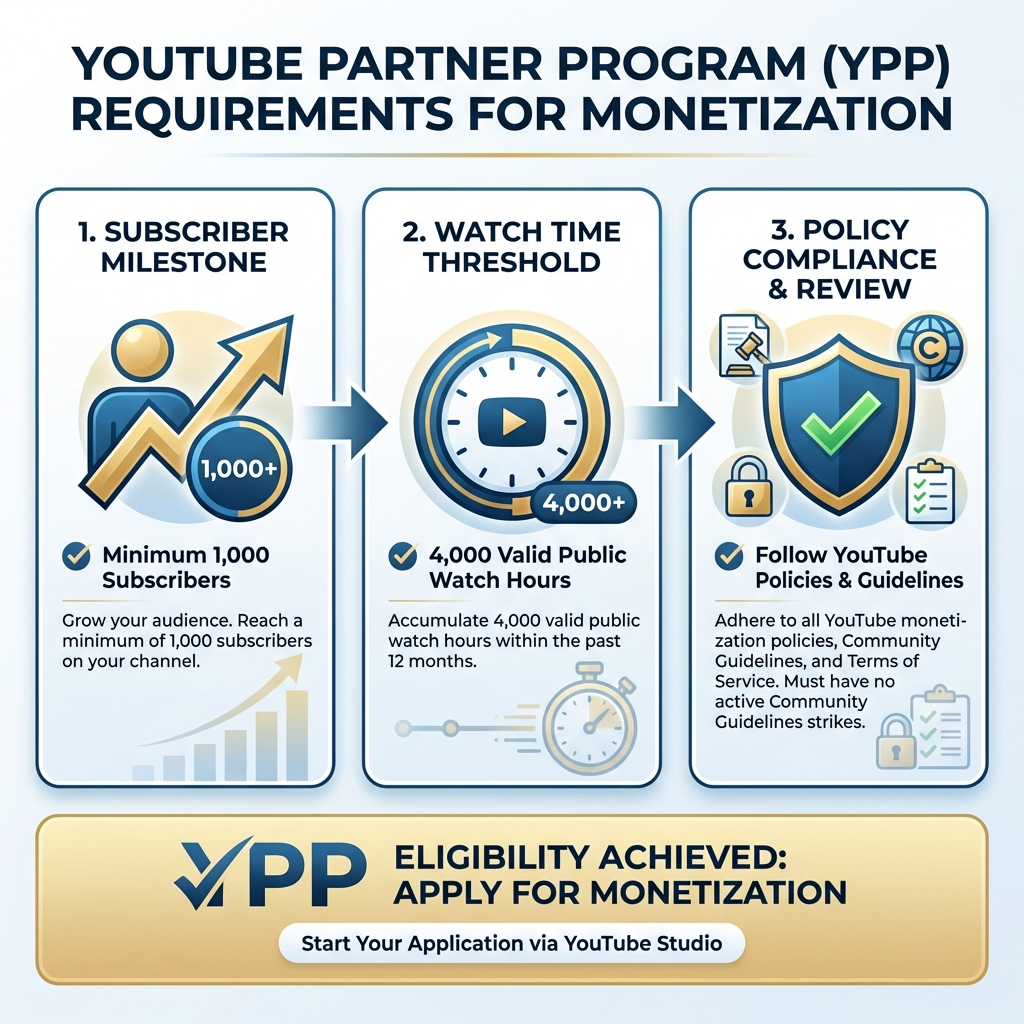
To qualify for YPP, channels must meet specific requirements:
- 1,000+ subscribers
- 4,000+ valid public watch hours in the past 12 months OR 10 million valid public Shorts views in the past 90 days
- Compliance with all YouTube monetization policies
- Active AdSense account linked to the channel
- Location availability in supported countries/regions
These thresholds, implemented in 2018, were designed to ensure that only serious creators with established audiences could access monetization features. While controversial initially, these requirements have helped improve overall ad inventory quality for advertisers.
Revenue Sharing Model
YouTube operates on a revenue-sharing model where creators receive 55% of ad revenue from their videos, while YouTube retains 45%. This split applies to most standard ad formats, though different rates apply to other monetization features like channel memberships or Super Chat.
For YouTube Shorts, the revenue sharing model differs significantly. The Shorts Fund, launched in 2021 with $100 million, was replaced in 2023 by the YouTube Shorts monetization program, which allocates revenue from Shorts ads to creators based on their share of total Shorts views.
YouTube Ad Formats and Implementation
Pre-Roll Advertisements
Pre-roll ads represent the most traditional and widely recognized YouTube ad format. These advertisements play before the main video content and can be either skippable (after 5 seconds) or non-skippable (15-20 seconds maximum).
Skippable pre-roll ads use a cost-per-view (CPV) model, where advertisers only pay when viewers watch at least 30 seconds or interact with the ad. Non-skippable ads typically use cost-per-mille (CPM) pricing, as viewers must watch the entire advertisement.
For publishers, pre-roll ads often generate the highest CPMs due to their prominent placement and guaranteed viewability. However, they can also impact user experience if not balanced properly with content value.
Mid-Roll Advertisement Integration
Mid-roll ads appear during video playback and are available for videos longer than 8 minutes. These ads can be automatically placed by YouTube’s algorithm or manually positioned by creators at strategic moments.
Mid-roll placement strategy significantly impacts both user experience and revenue generation. Best practices include:
- Placing ads at natural content breaks
- Avoiding ad placement during crucial information delivery
- Using YouTube Analytics to identify optimal placement timing
- Testing different frequencies to balance revenue and retention
Research indicates that mid-roll ads can increase total video revenue by 40-60% when properly implemented, making them crucial for long-form content monetization.
Display and Overlay Advertisements
Display ads appear alongside video content in various positions, including banner ads below the video player and overlay ads that appear over the video content. These formats typically generate lower CPMs than video ads but provide additional revenue opportunities without interrupting content flow.
Overlay ads, while less intrusive than pre-roll advertisements, require careful consideration of mobile viewing experiences, as they’re only available on desktop platforms.
Advanced Monetization Strategies
Programmatic Integration and Header Bidding
While YouTube’s built-in advertising system handles most monetization automatically, sophisticated publishers are exploring ways to integrate programmatic advertising strategies. Although direct header bidding implementation isn’t possible within YouTube’s ecosystem, publishers can apply programmatic principles to their broader video content strategy.
Publishers operating their own video platforms alongside YouTube channels can implement advanced programmatic solutions. For instance, video player solutions like Veedmo enable publishers to leverage header bidding and programmatic advertising for their owned-and-operated video content, potentially achieving higher CPMs than platform-dependent monetization.
YouTube Shorts Monetization
YouTube Shorts represents a rapidly growing monetization opportunity, with the platform investing heavily in competing with TikTok and other short-form video platforms. The Shorts monetization program, launched in early 2023, allows creators to earn revenue from ads shown between Shorts videos.
Shorts monetization operates differently from traditional YouTube ads:
- Revenue is pooled from ads shown between Shorts
- Individual creator earnings depend on their share of total Shorts views
- Music usage affects revenue splits, with portions allocated to music publishers
- CPMs are generally lower than long-form content but volume can compensate
Live Streaming Revenue Opportunities
YouTube’s live streaming features offer unique monetization opportunities beyond traditional advertising:
Super Chat and Super Thanks: Viewers can purchase highlighted messages during live streams or leave paid thanks on videos. Revenue splits favor creators more heavily than standard advertising.
Channel Memberships: Monthly subscription feature allowing creators to offer exclusive perks to paying members. Creators retain 70% of membership revenue.
Merchandise Shelf Integration: Direct product sales integration for eligible channels, enabling e-commerce monetization alongside advertising revenue.
Optimization Strategies for Maximum Revenue
Content Strategy for Higher CPMs
Certain content categories consistently achieve higher advertising CPMs due to advertiser demand and audience value:
High-Value Categories:
- Personal finance and investing
- Technology reviews and tutorials
- Business and entrepreneurship
- Health and wellness (with proper disclaimers)
- Real estate and home improvement
Optimization Techniques:
- Targeting high-value keywords in titles and descriptions
- Creating content for audiences with higher purchasing power
- Developing series-based content to increase watch time
- Optimizing for seasonal advertising spending patterns
Audience Development and Retention
YouTube’s algorithm heavily weights engagement metrics when determining monetization potential. Key performance indicators include:
Watch Time Optimization:
- Average view duration above 50% indicates strong content engagement
- Session duration measures how long viewers stay on YouTube after watching your video
- Click-through rates from thumbnails and titles affect overall reach
Engagement Metrics:
- Likes, comments, and shares signal content quality to the algorithm
- Subscriber conversion rates indicate long-term audience value
- Community tab engagement (for eligible channels) boosts overall channel health
Analytics and Performance Monitoring
YouTube Analytics provides extensive data for optimizing monetization performance:
Revenue Metrics:
- RPM (Revenue Per Mille): Total revenue per 1,000 views
- CPM (Cost Per Mille): What advertisers pay per 1,000 monetized playbacks
- Playback-based CPM: More accurate measure excluding non-monetized views
Traffic Analysis:
- Revenue by traffic source identifies most valuable audience segments
- Geographic revenue data helps optimize content timing and targeting
- Device-based performance guides mobile optimization strategies
Policy Compliance and Risk Management
Content Guidelines and Demonetization
YouTube’s monetization policies have become increasingly strict, particularly around:
Advertiser-Friendly Content Guidelines:
- Violence and dangerous activities restrictions
- Inappropriate language limitations (including mild profanity)
- Controversial or sensitive subject matter policies
- Repetitious or mass-produced content restrictions
Best Practices for Policy Compliance:
- Regular policy update monitoring and implementation
- Content review processes before publication
- Appeal procedures understanding for policy violations
- Diversified revenue stream development to reduce platform dependency
Copyright and Content ID Management
YouTube’s Content ID system can significantly impact monetization:
Copyright Considerations:
- Understanding fair use limitations and applications
- Licensed music usage and revenue sharing implications
- Visual content copyright compliance
- Proper attribution and licensing documentation
Alternative Monetization Integration
Multi-Platform Strategy Development
Successful publishers increasingly adopt multi-platform approaches, using YouTube as part of broader monetization strategies:
Platform Diversification:
- Cross-platform content adaptation and optimization
- Audience migration strategies to owned properties
- Email list building through YouTube traffic
- Podcast and audio content expansion
Direct Monetization Channels:
- Patreon and subscription platform integration
- Course and digital product sales
- Affiliate marketing optimization
- Brand partnership and sponsorship development
Future Monetization Trends
The YouTube monetization landscape continues evolving with emerging technologies and changing user behaviors:
Emerging Opportunities:
- Interactive ad formats and shoppable video content
- Virtual and augmented reality advertising integration
- Artificial intelligence-driven content optimization
- Blockchain and NFT integration possibilities
Conclusion
YouTube monetization success requires comprehensive understanding of platform mechanics, audience development, and broader digital advertising trends. Publishers who invest in learning these systems, maintaining policy compliance, and developing diversified revenue strategies position themselves for long-term success in the evolving digital video landscape.
As the platform continues growing and competing with emerging video platforms, monetization opportunities will likely expand. However, success will increasingly depend on creators’ ability to produce high-quality, engaging content that serves both audience needs and advertiser objectives while maintaining compliance with evolving platform policies.
The key to sustainable YouTube monetization lies in treating it as part of a broader content and revenue strategy rather than a standalone solution, ensuring multiple revenue streams and reduced platform dependency risk.