Video SSP Guide: Maximizing Revenue for Publishers in 2024
Supply-Side Platforms (SSPs) have revolutionized programmatic advertising, and video SSPs represent the cutting edge of digital monetization for publishers. As video content consumption continues to dominate digital media, understanding and effectively implementing video SSPs has become crucial for maximizing ad revenue.
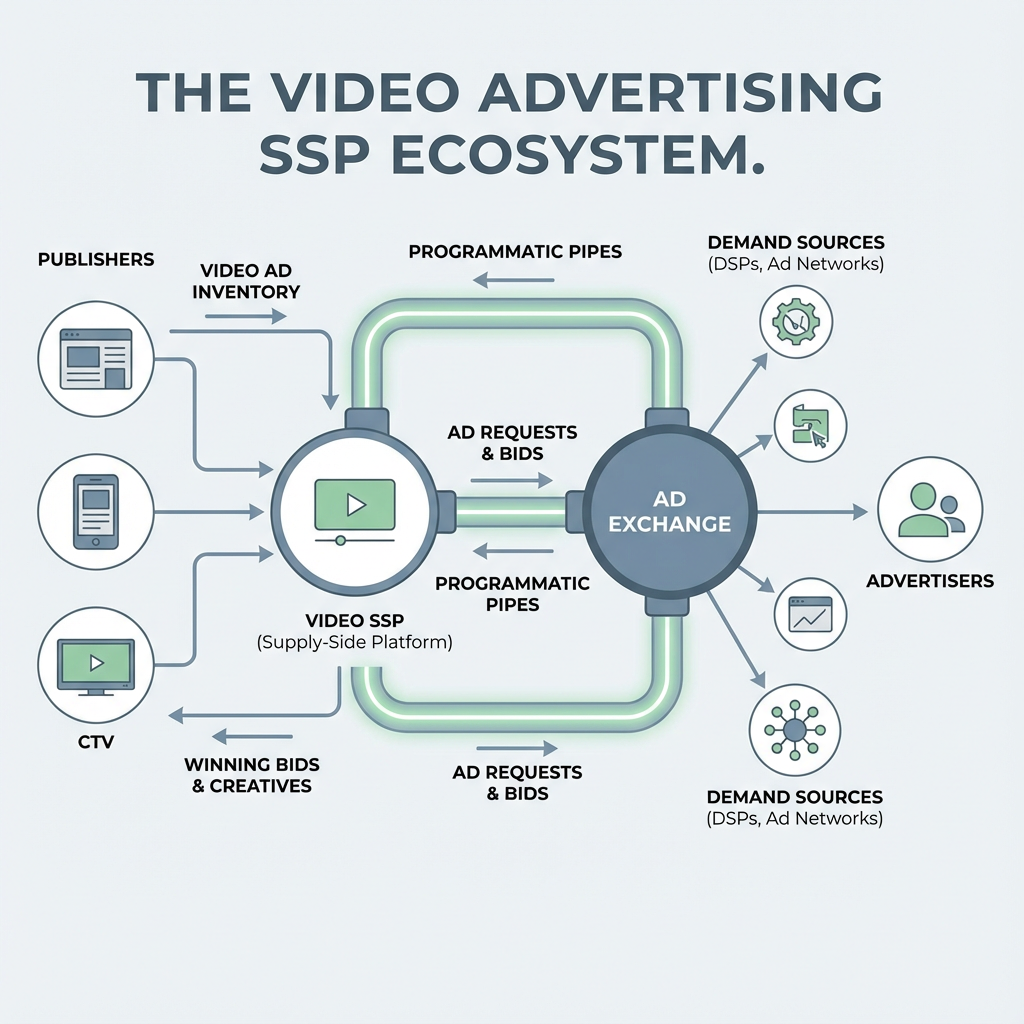
What is a Video SSP?
A Video Supply-Side Platform is a technology platform that enables publishers to sell their video advertising inventory programmatically. Unlike traditional display SSPs, video SSPs are specifically designed to handle the complexities of video advertising, including multiple ad formats, various player integrations, and sophisticated targeting capabilities.
Video SSPs act as intermediaries between publishers and demand sources, including ad exchanges, demand-side platforms (DSPs), and direct advertisers. They provide publishers with tools to manage, optimize, and monetize their video inventory while maintaining control over pricing, buyer access, and ad quality.
Key Components of Video SSPs
Inventory Management: Video SSPs provide publishers with granular control over their ad inventory, allowing them to set floor prices, manage ad pods, and define targeting parameters.
Real-Time Bidding Integration: These platforms connect to multiple ad exchanges and DSPs, enabling real-time auctions for video ad placements.
Analytics and Reporting: Comprehensive dashboards provide insights into revenue performance, fill rates, and audience engagement metrics.
Quality Controls: Advanced filtering mechanisms ensure brand safety and maintain ad quality standards.
How Video SSPs Differ from Traditional SSPs
Video SSPs must handle unique challenges that don’t exist in display advertising:
Technical Complexity
Video advertising requires specialized protocols like VAST (Video Ad Serving Template), VPAID (Video Player Ad Interface Definition), and VMAP (Video Multiple Ad Playlist). Video SSPs must seamlessly integrate with these standards to ensure proper ad delivery and tracking.
Format Variety
Unlike static display ads, video SSPs must support multiple ad formats including pre-roll, mid-roll, post-roll, and interactive overlays. Each format has different requirements for duration, placement, and user experience considerations.
Bandwidth and Quality Considerations
Video SSPs must optimize for various connection speeds and device capabilities, ensuring smooth playback while maintaining ad quality. This includes adaptive bitrate streaming and format selection based on user context.
Implementation Strategies for Publishers
1. Inventory Assessment and Preparation
Before implementing a video SSP, publishers should conduct a thorough assessment of their video inventory:
Content Categorization: Organize video content by topic, duration, and audience demographics to enable better targeting.
Technical Audit: Ensure video players support necessary ad standards and can handle programmatic demand.
Traffic Analysis: Understand viewing patterns, peak times, and user behavior to optimize ad placement strategies.
2. Header Bidding Integration
Modern video SSPs often integrate with header bidding solutions to maximize competition and revenue:
// Example header bidding configuration for video
var videoAdUnit = {
    code: 'video-ad-unit-1',
    mediaTypes: {
        video: {
            playerSize: [640, 480],
            context: 'instream',
            protocols: [2, 3, 5, 6],
            mimes: ['video/mp4'],
            minduration: 15,
            maxduration: 30
        }
    },
    bids: [{
        bidder: 'videoSSP',
        params: {
            placementId: 'video-123',
            video: {
                skippable: true,
                playback_method: ['auto_play_sound_on']
            }
        }
    }]
};
3. Ad Pod Optimization
For longer-form content, publishers can implement ad pods to increase revenue while maintaining user experience:
Pod Structure: Design ad breaks with appropriate frequency and duration based on content length.
Competitive Separation: Implement rules to prevent competing advertisers from appearing in the same pod.
Yield Optimization: Use dynamic allocation to balance guaranteed campaigns with programmatic demand.
Revenue Optimization Techniques
Dynamic Floor Pricing
Implement intelligent floor pricing strategies that adjust based on:
- Time of day and seasonality
- Audience quality and demographics
- Historical performance data
- Market demand indicators
Private Marketplace (PMP) Setup
Create exclusive deals with premium advertisers:
Deal ID Management: Set up preferred deals and private auctions for high-value inventory.
Audience Packages: Bundle specific demographic or behavioral segments for premium pricing.
Brand Safety Assurance: Provide additional quality guarantees for PMP buyers.
Cross-Device Optimization
Optimize video SSP performance across different devices:
Mobile-First Approach: Prioritize vertical video formats and shorter durations for mobile inventory.
CTV Integration: Leverage Connected TV (CTV) demand for premium living room inventory.
Desktop Optimization: Maximize longer-form content opportunities on desktop platforms.
Technical Implementation Best Practices
Player Integration
Proper video player integration is crucial for SSP success. Publishers should ensure their video players, such as solutions like Veedmo for enhanced video delivery, support programmatic ad insertion and provide necessary tracking capabilities.
VAST Compliance
Ensure full VAST compliance for maximum demand access:
<VAST version="4.0">
    <Ad id="video-ssp-ad">
        <InLine>
            <AdSystem version="1.0">Video SSP</AdSystem>
            <AdTitle>Brand Campaign</AdTitle>
            <Impression>https://ssp.com/impression</Impression>
            <Creatives>
                <Creative>
                    <Linear>
                        <Duration>00:00:30</Duration>
                        <TrackingEvents>
                            <Tracking event="start">https://ssp.com/start</Tracking>
                            <Tracking event="complete">https://ssp.com/complete</Tracking>
                        </TrackingEvents>
                        <VideoClicks>
                            <ClickThrough>https://advertiser.com</ClickThrough>
                        </VideoClicks>
                        <MediaFiles>
                            <MediaFile delivery="progressive" type="video/mp4" width="1280" height="720">
                                https://cdn.com/video.mp4
                            </MediaFile>
                        </MediaFiles>
                    </Linear>
                </Creative>
            </Creatives>
        </InLine>
    </Ad>
</VAST>
Latency Optimization
Minimize ad request latency to improve user experience:
Prefetching: Load ad content during natural breaks in user engagement.
Caching Strategies: Implement intelligent caching for frequently requested inventory.
CDN Integration: Use content delivery networks to reduce geographic latency.
Performance Monitoring and Analytics
Key Performance Indicators (KPIs)
Track essential metrics to optimize video SSP performance:
Revenue Metrics:
- eCPM (effective Cost Per Mille)
- Total revenue
- Revenue per visitor
Operational Metrics:
- Fill rate
- Ad request volume
- Latency measurements
Quality Metrics:
- Video completion rates
- Click-through rates
- User engagement scores
A/B Testing Framework
Implement systematic testing to optimize performance:
Ad Format Testing: Compare performance across different video ad formats.
Placement Optimization: Test various ad placement strategies within content.
Pricing Experiments: Evaluate different floor pricing approaches.
Troubleshooting Common Issues
Low Fill Rates
Diagnosis Steps:
- Review inventory categorization and targeting parameters
- Analyze floor pricing competitiveness
- Check technical implementation for errors
- Evaluate demand source diversity
Solutions:
- Expand targeting parameters where appropriate
- Adjust floor prices based on market data
- Add additional demand sources
- Implement fallback ad serving
Revenue Discrepancies
Common Causes:
- Tracking pixel failures
- Ad viewability issues
- Fraudulent traffic detection
- Currency conversion differences
Resolution Process:
- Implement comprehensive logging
- Cross-reference multiple data sources
- Establish clear reconciliation procedures
- Maintain open communication with SSP partners
Future Trends and Considerations
Cookieless Targeting
As third-party cookies phase out, video SSPs are adapting:
Contextual Targeting: Enhanced content analysis for relevant ad placement.
First-Party Data Integration: Leveraging publisher-owned audience data.
Identity Solutions: Implementing alternative identification methodologies.
Advanced Video Formats
Emerging ad formats require SSP adaptation:
Interactive Video: Enabling user engagement within ad content.
Shoppable Video: Direct commerce integration within video ads.
AR/VR Integration: Preparing for immersive advertising experiences.
Artificial Intelligence Integration
AI-powered optimization is becoming standard:
Predictive Analytics: Forecasting optimal pricing and inventory allocation.
Automated Optimization: Real-time bidding strategy adjustments.
Fraud Detection: Advanced pattern recognition for traffic quality.
Conclusion
Video SSPs represent a critical component of modern publisher monetization strategies. Success requires careful implementation, continuous optimization, and adaptation to evolving industry standards. Publishers who invest in proper video SSP integration and ongoing optimization will be well-positioned to maximize revenue from their video content.
The key to video SSP success lies in balancing technical excellence with strategic revenue optimization. By focusing on user experience while maximizing advertiser value, publishers can create sustainable, profitable video advertising businesses that thrive in the programmatic ecosystem.
As the industry continues to evolve, staying informed about new technologies, standards, and best practices will ensure continued success in video advertising monetization. The investment in proper video SSP implementation and optimization pays dividends through increased revenue, better user experiences, and stronger advertiser relationships.