SIMID (Secure Interactive Media Interface Definition): Complete Guide for Publishers
Secure Interactive Media Interface Definition (SIMID) represents one of the most significant advances in digital video advertising technology in recent years. As an Interactive Advertising Bureau (IAB) Tech Lab standard, SIMID addresses longstanding challenges in video ad delivery while opening new opportunities for creative innovation and improved user experiences.
For publishers and ad operations professionals, understanding SIMID is crucial for staying competitive in an increasingly complex advertising ecosystem. This comprehensive guide explores everything you need to know about implementing and leveraging SIMID for your video advertising strategy.
What is SIMID?
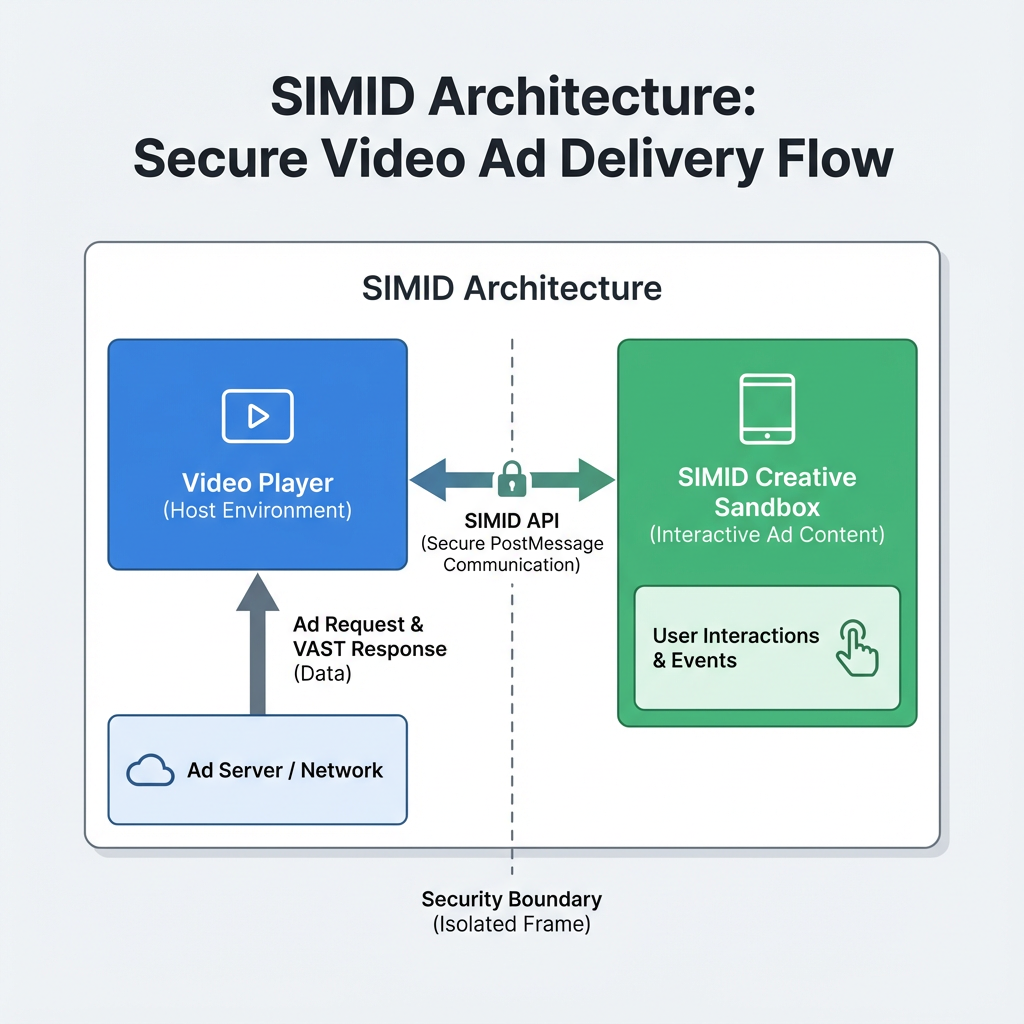
SIMID is an open-source standard developed by the IAB Tech Lab that enables secure, two-way communication between video advertisements and media players. Unlike traditional video ad formats that operate as isolated units, SIMID creates a controlled environment where ads can interact with the player while maintaining security and performance standards.
The standard addresses three fundamental challenges in video advertising:
- Security vulnerabilities in traditional ad implementations
- Limited creative possibilities due to restricted ad-player communication
- Inconsistent user experiences across different platforms and devices
SIMID achieves this through a JavaScript-based messaging system that operates within a secure sandbox, allowing ads to request player actions without compromising the publisher’s content or user data.
Core Components of SIMID
SIMID Creative
A SIMID creative is fundamentally different from traditional video ads. Instead of being a simple video file, it’s an HTML/JavaScript application that can:
- Display rich media content
- Respond to user interactions
- Communicate with the media player
- Adapt to different screen sizes and orientations
- Track engagement metrics in real-time
Media Player Integration
For SIMID to function, media players must implement the SIMID Player API. This integration enables:
- Message handling: Processing requests from SIMID ads
- State management: Tracking ad playback status and user interactions
- Resource control: Managing CPU, memory, and network usage
- Security enforcement: Maintaining sandbox boundaries
Communication Protocol
SIMID uses a standardized messaging protocol based on JSON objects. Key message types include:
- Player state messages: Conveying playback status, volume levels, and viewport changes
- Creative control messages: Allowing ads to request player actions like pause, resume, or skip
- Tracking messages: Enabling measurement and analytics integration
Technical Implementation for Publishers
Prerequisites
Before implementing SIMID, publishers need:
- Compatible video player: Either upgrade existing players or adopt SIMID-compliant solutions
- Ad server integration: Ensure your ad server can deliver SIMID creatives
- Quality assurance processes: Establish testing procedures for SIMID ads
- Performance monitoring: Implement tools to track SIMID ad performance
Step-by-Step Implementation
1. Player Preparation
First, ensure your video player supports the SIMID specification. Many modern video players, including solutions like Veedmo and other enterprise-grade platforms, now offer built-in SIMID support. Key implementation requirements include:
// Example SIMID player initialization
const simidPlayer = new SIMIDPlayer({
  allowedDomains: ['trusted-ad-server.com'],
  securityLevel: 'strict',
  timeoutDuration: 30000
});
2. Ad Request Modification
Update your ad request parameters to indicate SIMID support:
- Add SIMID mime types to your ad requests
- Specify supported SIMID versions
- Include device and player capability information
3. Creative Validation
Implement validation processes for incoming SIMID creatives:
function validateSIMIDCreative(creative) {
  return {
    hasRequiredFiles: checkManifest(creative),
    securityCompliant: validateSandbox(creative),
    performanceOptimized: analyzeResourceUsage(creative)
  };
}
4. Fallback Mechanisms
Always implement fallback options for devices or situations where SIMID isn’t supported:
if (player.supportsSIMID() && creative.type === 'simid') {
  loadSIMIDCreative(creative);
} else {
  loadTraditionalVideoAd(creative.fallback);
}
Benefits for Publishers
Enhanced User Experience
SIMID ads provide several user experience improvements:
- Smoother interactions: Ads can respond to user actions without page reloads
- Better mobile optimization: Dynamic adaptation to screen orientation and size changes
- Reduced loading times: More efficient resource management
- Consistent behavior: Standardized interactions across different ad creatives
Increased Revenue Potential
Publishers implementing SIMID often see revenue benefits through:
- Premium ad rates: Interactive SIMID ads typically command higher CPMs
- Better completion rates: Enhanced user experience leads to fewer ad skips
- Improved targeting: Real-time adaptation capabilities enable better audience matching
- Extended engagement: Interactive elements can increase time spent with ads
Operational Advantages
Simplified Ad Operations
- Standardized implementation: Consistent behavior across different advertisers
- Reduced troubleshooting: Built-in error handling and reporting
- Better testing capabilities: Comprehensive validation tools
Enhanced Analytics
SIMID provides granular tracking capabilities:
// Example SIMID analytics implementation
simidAd.on('userInteraction', (event) => {
  analytics.track({
    type: 'simid_interaction',
    action: event.action,
    timestamp: Date.now(),
    adId: event.creativeId
  });
});
Real-World Applications and Use Cases
Interactive Video Ads
Automotive Industry Example: A car manufacturer creates a SIMID ad that allows users to:
- Change vehicle colors in real-time
- Explore interior features through hotspots
- Schedule test drives directly within the ad
- View 360-degree vehicle tours
Results: 300% increase in engagement rates, 45% improvement in click-through rates compared to traditional video ads.
Gaming and Entertainment
Mobile Game Promotion: A gaming company uses SIMID to create playable ad experiences:
- Mini-game demos within the ad unit
- Real-time leaderboards showing other players’ scores
- Instant app download with progress preservation
- Social sharing integration
Results: 250% increase in install rates, 40% improvement in day-1 retention.
E-commerce Applications
Retail Fashion Brand: SIMID enables dynamic product showcases:
- Virtual try-on experiences
- Size and color selection within ads
- Real-time inventory checking
- Personalized product recommendations
Results: 180% increase in conversion rates, 60% reduction in cart abandonment.
Common Implementation Challenges
Technical Hurdles
Player Compatibility
Challenge: Not all video players support SIMID natively. Solution:
- Partner with SIMID-compliant player providers
- Implement gradual rollout strategies
- Maintain robust fallback mechanisms
Performance Optimization
Challenge: SIMID ads can be resource-intensive. Solution:
// Resource monitoring example
const resourceMonitor = {
  maxMemoryUsage: 50 * 1024 * 1024, // 50MB
  maxCPUUsage: 30, // 30%
  timeoutDuration: 45000 // 45 seconds
};

simidAd.setResourceLimits(resourceMonitor);
Security Considerations
Challenge: Ensuring ad sandbox security while enabling interactivity. Solution:
- Implement strict Content Security Policy (CSP) rules
- Regular security audits of SIMID implementations
- Whitelist trusted ad servers and creative sources
Operational Challenges
Quality Assurance
Develop comprehensive testing protocols:
- Functional testing: Verify all interactive elements work correctly
- Performance testing: Ensure ads don’t impact page performance
- Security testing: Validate sandbox containment
- Cross-platform testing: Test across devices and browsers
Training and Education
Ad operations teams need training on:
- SIMID technical concepts
- Troubleshooting procedures
- Performance monitoring
- Creative quality assessment
Future of SIMID
Emerging Trends
Connected TV Integration
SIMID is increasingly important for Connected TV (CTV) advertising:
- Enhanced interactivity on large screens
- Integration with voice controls and remote interactions
- Seamless cross-device experiences
Augmented Reality Integration
Next-generation SIMID implementations will likely include:
- AR try-on experiences
- Spatial advertising integration
- Real-world object recognition
Artificial Intelligence Enhancement
- Real-time creative optimization based on user behavior
- Predictive interaction modeling
- Automated A/B testing of creative elements
Industry Adoption Trends
Current adoption rates show:
- 65% of major publishers plan SIMID implementation within 12 months
- 40% increase in SIMID-capable ad inventory year-over-year
- Premium CPM rates 25-40% higher for SIMID ads
Best Practices for Success
Implementation Strategy
- Start Small: Begin with a limited rollout to test systems and processes
- Monitor Performance: Establish baseline metrics before full implementation
- Educate Teams: Invest in training for ad ops and technical teams
- Plan Fallbacks: Always have non-SIMID alternatives ready
Creative Guidelines
Work with advertisers to ensure SIMID creatives:
- Load quickly (under 3 seconds)
- Provide clear value to users
- Maintain brand consistency
- Include accessibility features
Performance Monitoring
Track key metrics:
- Creative load times
- Interaction rates
- Completion rates
- Revenue impact
- User satisfaction scores
Conclusion
SIMID represents a paradigm shift in video advertising, offering publishers the opportunity to deliver more engaging, interactive ad experiences while maintaining security and performance standards. While implementation requires careful planning and technical expertise, the benefits—including increased revenue, better user experiences, and operational efficiencies—make SIMID adoption a strategic imperative for forward-thinking publishers.
Success with SIMID requires a holistic approach encompassing technical implementation, operational procedures, and strategic partnerships. Publishers who invest in SIMID capabilities now will be well-positioned to capitalize on the interactive advertising opportunities of the future.
By following the guidelines and best practices outlined in this guide, publishers can successfully implement SIMID and unlock new revenue streams while delivering superior ad experiences to their audiences.