OTT Video Ads: Complete Guide for Publishers and Ad Operations in 2024
Over-the-top (OTT) video advertising has revolutionized how publishers monetize streaming content, offering unprecedented opportunities to reach cord-cutting audiences. As traditional TV viewership continues to decline, OTT platforms have emerged as the dominant force in video consumption, fundamentally changing the advertising landscape.
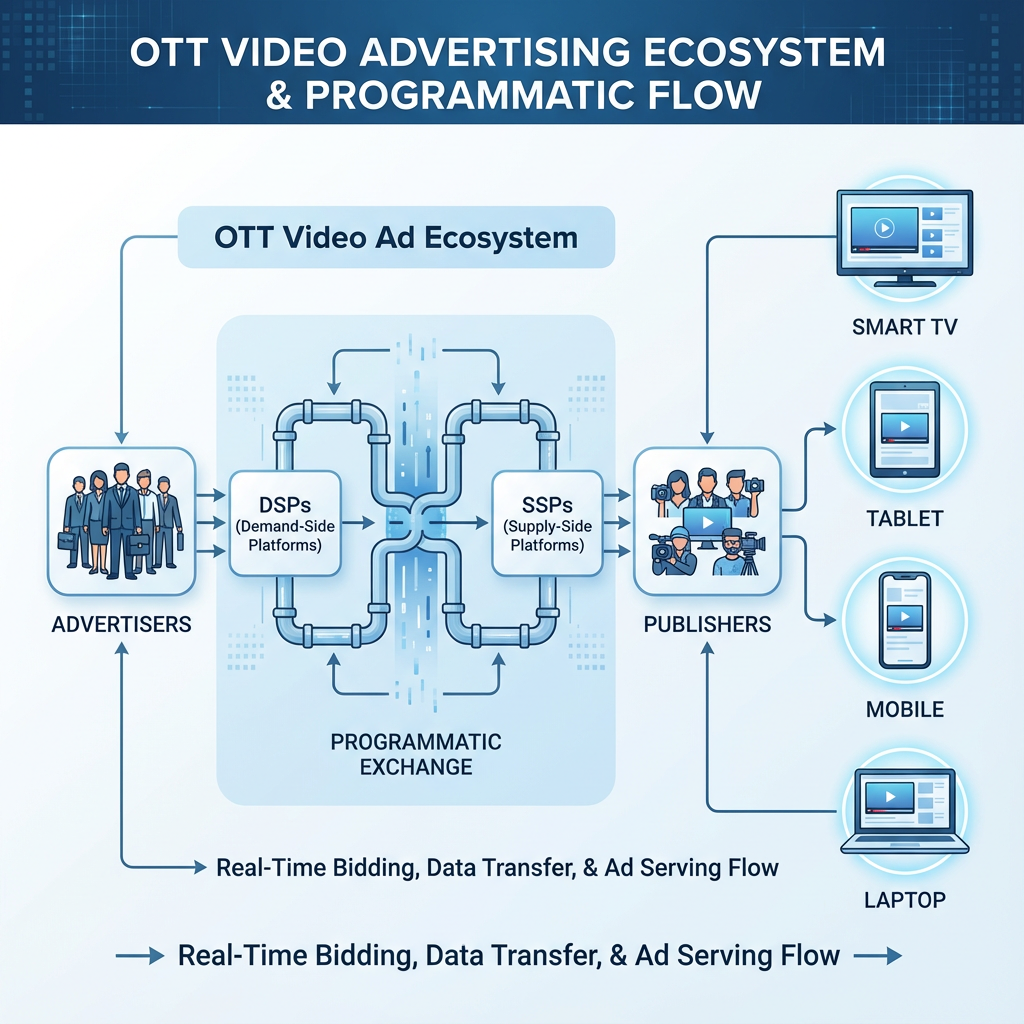
For publishers and ad operations professionals, understanding OTT video ads isn’t just advantageous—it’s essential for survival in today’s digital-first media environment. This comprehensive guide explores everything you need to know about implementing, optimizing, and monetizing OTT video advertising.
What Are OTT Video Ads?
OTT video ads are advertisements delivered through streaming video services that bypass traditional cable or satellite television infrastructure. These ads appear within content accessed via internet-connected devices, including smart TVs, streaming devices, mobile apps, and web browsers.
Unlike traditional TV advertising, OTT ads leverage programmatic technology to enable precise audience targeting, real-time optimization, and detailed performance measurement. This creates a more efficient advertising ecosystem where publishers can maximize revenue while advertisers achieve better ROI.
Key Characteristics of OTT Video Ads
- Device Agnostic: Delivered across multiple screens and platforms
- Programmatic Integration: Automated buying and selling through demand-side platforms (DSPs) and supply-side platforms (SSPs)
- Advanced Targeting: Demographic, behavioral, and contextual targeting capabilities
- Measurable Impact: Detailed analytics and attribution modeling
- Premium Inventory: High-quality, brand-safe advertising environments
Types of OTT Video Ad Formats
Pre-Roll Ads
Pre-roll advertisements play before the main content begins, typically lasting 15-30 seconds. These ads achieve high completion rates since viewers must watch them to access desired content. Publishers often reserve pre-roll inventory for premium advertisers due to guaranteed viewability.
Implementation Best Practices:
- Keep ads under 30 seconds to minimize abandonment
- Ensure seamless transition between ad and content
- Implement frequency capping to prevent viewer fatigue
Mid-Roll Ads
Mid-roll ads appear during natural content breaks, similar to traditional TV commercial breaks. These placements often command higher CPMs due to engaged viewership and lower skip rates. Strategic placement at cliffhangers or scene transitions maximizes viewer retention.
Optimization Strategies:
- Analyze content for natural break points
- Limit mid-roll frequency to maintain user experience
- Use contextual targeting based on content genre
Post-Roll Ads
Post-roll advertisements play after content completion, though they typically see lower engagement rates. However, they provide valuable inventory for retargeting campaigns and brand awareness initiatives without interrupting the viewing experience.
Interactive OTT Ads
Interactive advertisements enable viewer engagement through clickable elements, polls, or mini-games. These formats drive higher engagement rates and provide additional data collection opportunities for publishers.
Monetization Strategies for Publishers
Revenue Model Optimization
Publishers can maximize OTT ad revenue through diversified monetization approaches:
Direct Sales: Building relationships with premium advertisers for guaranteed inventory at higher CPMs
Programmatic Auctions: Leveraging real-time bidding to optimize fill rates and revenue per impression
Private Marketplaces (PMPs): Creating exclusive inventory packages for preferred buyers
Header Bidding Integration: Implementing unified auction mechanisms to increase competition and drive up prices
Ad Pod Strategies
Ad pods—groups of advertisements played sequentially—mirror traditional TV advertising while providing enhanced targeting capabilities. Publishers should consider:
- Optimal pod length (typically 60-120 seconds)
- Advertiser separation rules to prevent competitive conflicts
- Dynamic pod optimization based on viewer behavior
- Waterfall optimization to maximize fill rates
Audience Segmentation
Effective audience segmentation enables premium pricing for targeted inventory:
Demographic Targeting: Age, gender, income, education level Behavioral Targeting: Viewing history, engagement patterns, device preferences Geographic Targeting: Location-based advertising for local businesses Contextual Targeting: Content-aligned advertising based on genre or topic
Technical Implementation
Video Ad Standards Integration
Successful OTT ad implementation requires adherence to industry standards:
VAST (Video Ad Serving Template): Enables communication between ad servers and video players, supporting various ad formats and tracking capabilities
VPAID (Video Player-Ad Interface Definition): Facilitates interactive ad experiences and advanced measurement for rich media advertisements
VMAP (Video Multiple Ad Playlist): Defines ad break timing and positioning within video content
SIMID (Secure Interactive Media Interface Definition): Provides enhanced security and functionality for interactive advertising experiences
Programmatic Integration
Publishers must establish robust programmatic infrastructure:
- Supply-Side Platform (SSP) Integration: Connect inventory to multiple demand sources
- Ad Server Configuration: Implement trafficking rules and targeting parameters
- Quality Assurance: Establish creative approval workflows and brand safety measures
- Analytics Implementation: Deploy comprehensive tracking and reporting systems
Video Player Considerations
Choosing the right video player significantly impacts ad performance and user experience. Publishers should evaluate players based on:
- Ad standard compatibility (VAST, VPAID, VMAP)
- Cross-device functionality
- Analytics and reporting capabilities
- Customization options for branding
- Loading speed and performance optimization
For publishers seeking comprehensive video solutions, platforms like Veedmo offer integrated ad-serving capabilities alongside robust video player functionality, streamlining the technical implementation process.
CTV and FAST Channel Opportunities
Connected TV (CTV) Advertising
CTV represents the fastest-growing segment of OTT advertising, with viewers consuming content on large screens in premium environments. Publishers can capitalize on CTV through:
Premium CPMs: CTV inventory typically commands 2-3x higher rates than mobile video Brand Safety: Living room viewing environments provide brand-safe contexts Household Targeting: Advanced demographic and psychographic targeting capabilities
FAST (Free Ad-Supported Television) Channels
FAST channels offer linear-like experiences with programmatic advertising integration. Publishers can:
- Aggregate existing content into themed channels
- Implement dynamic ad insertion for personalized experiences
- Leverage content libraries for continuous programming
- Create appointment viewing for premium advertising opportunities
Performance Optimization
Key Performance Indicators (KPIs)
Publishers should monitor essential metrics to optimize OTT ad performance:
Revenue Metrics:
- eCPM (effective cost per mille)
- Fill rate percentage
- Revenue per user (RPU)
- Ad load optimization
User Experience Metrics:
- Video completion rates
- Abandonment rates during ads
- Session duration
- Return viewer percentage
Technical Performance:
- Ad load times
- Error rates
- Cross-device compatibility
- Streaming quality maintenance
A/B Testing Strategies
Continuous optimization requires systematic testing:
- Ad pod length variations
- Frequency cap adjustments
- Creative format comparisons
- Targeting parameter refinements
Industry Trends and Future Outlook
Market Growth Projections
OTT advertising spending continues explosive growth, with industry analysts projecting:
- Global OTT ad revenue reaching $200+ billion by 2027
- CTV advertising growing 25%+ annually
- Programmatic OTT transactions comprising 80%+ of total spend
Emerging Technologies
Advanced Measurement: Cross-device attribution and incrementality testing AI-Powered Optimization: Machine learning algorithms for dynamic ad placement Blockchain Integration: Transparent, fraud-resistant advertising ecosystems 5G Networks: Enhanced streaming quality enabling richer ad experiences
Privacy and Regulation
Publishers must navigate evolving privacy landscapes:
- First-party data strategies for targeting
- Consent management platform integration
- GDPR and CCPA compliance requirements
- Cookieless advertising preparation
Best Practices for Ad Operations Teams
Workflow Optimization
- Inventory Forecasting: Use historical data and seasonal trends for accurate availability predictions
- Creative Quality Control: Implement automated and manual review processes
- Campaign Monitoring: Establish real-time alerting for performance anomalies
- Reporting Automation: Create standardized dashboards for stakeholder communication
Cross-Platform Strategy
Develop cohesive advertising experiences across:
- Mobile applications
- Web-based players
- Smart TV applications
- Gaming console apps
Revenue Protection
Implement safeguards against revenue loss:
- Ad fraud detection and prevention
- Brand safety verification
- Viewability measurement standards
- Invalid traffic filtering
Conclusion
OTT video advertising represents a paradigm shift in digital media monetization, offering publishers unprecedented opportunities for revenue growth and audience engagement. Success requires strategic planning, technical expertise, and continuous optimization.
Publishers who invest in robust OTT advertising infrastructure, implement industry-standard technologies, and maintain focus on user experience will capture the greatest share of the growing OTT advertising market. The key lies in balancing monetization goals with viewer satisfaction while leveraging advanced targeting and measurement capabilities.
As the OTT landscape continues evolving, publishers must remain agile, embracing new technologies and adapting to changing consumer behaviors. Those who master OTT video advertising today will define the future of digital media monetization.