Video Ad Revenue Optimization Guide: Maximize Your 2024 Earnings
Video advertising has become the cornerstone of digital revenue for publishers worldwide, with spending projected to reach $120 billion globally by 2024. As streaming consumption continues to surge and traditional TV advertising dollars migrate online, understanding how to maximize video ad revenue has never been more critical for publishers and ad ops professionals.
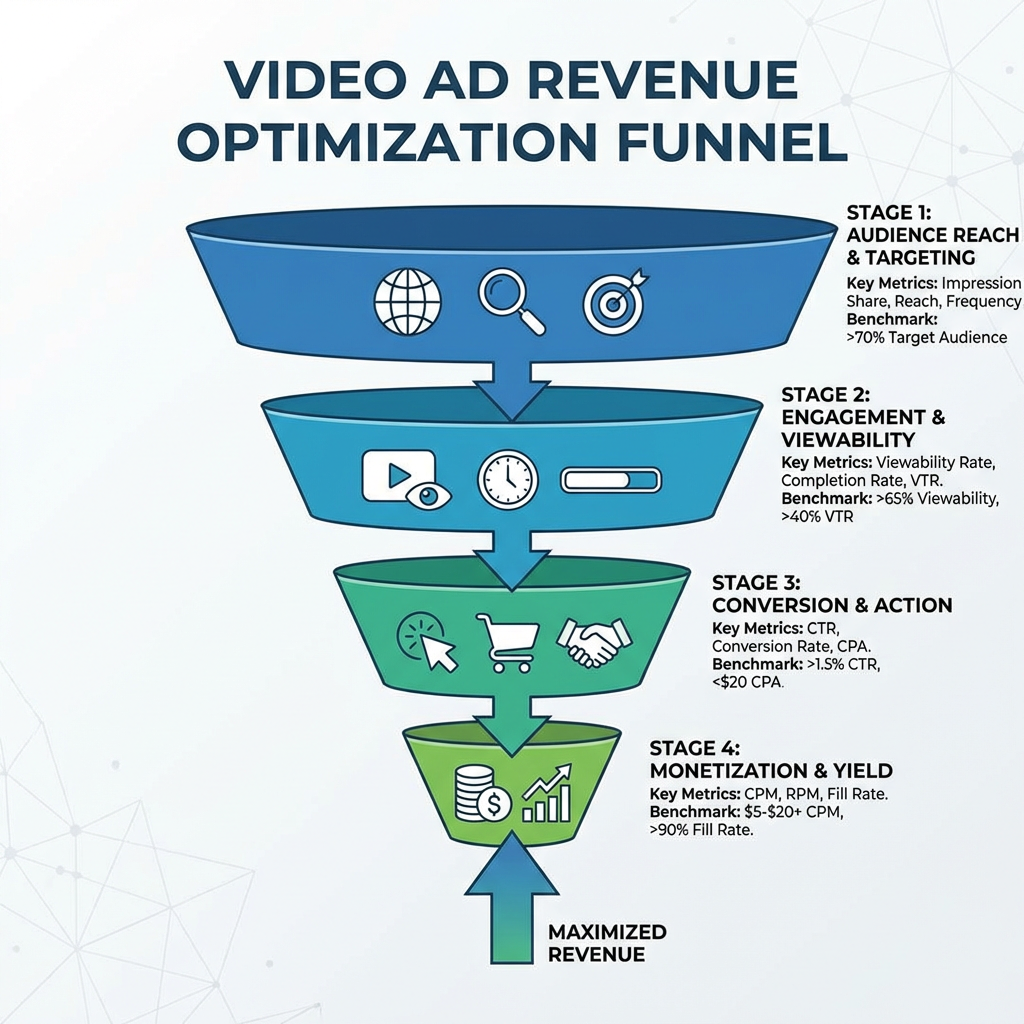
This comprehensive guide explores the essential strategies, technologies, and best practices that drive sustainable video ad revenue growth in today’s competitive landscape.
Understanding Video Ad Revenue Fundamentals
Video ad revenue represents the income generated from displaying video advertisements across digital properties. Unlike traditional banner advertising, video ads command premium CPMs due to their engaging format and proven effectiveness in driving brand awareness and conversions.
Key Revenue Drivers
The foundation of successful video ad revenue lies in understanding the primary factors that influence earnings:
Audience Quality and Scale: Premium demographics and substantial reach create the foundation for strong revenue performance. Advertisers pay significantly more for audiences aged 25-54 with higher household incomes.
Content Context: Video ads perform best when aligned with relevant, high-quality content. Entertainment, news, and sports content typically command the highest CPMs due to engaged viewership.
Technical Infrastructure: Robust ad serving capabilities, fast load times, and seamless playback experiences directly impact fill rates and advertiser satisfaction.
Inventory Management: Strategic control of ad placement, frequency, and timing maximizes both user experience and revenue potential.
Programmatic Video Advertising: The Revenue Engine
Programmatic advertising has revolutionized video ad revenue by enabling real-time bidding and automated optimization. Publishers leveraging programmatic platforms typically see 30-50% higher revenue compared to direct-sold inventory alone.
Real-Time Bidding Benefits
Programmatic platforms create competitive auction environments where multiple advertisers bid simultaneously for each impression. This competition drives CPMs higher while ensuring optimal fill rates across all inventory.
Major supply-side platforms (SSPs) like Google Ad Manager, Amazon Publisher Services, and PubMatic provide access to thousands of demand sources, creating revenue opportunities that would be impossible through direct sales alone.
Implementing Programmatic Strategy
Successful programmatic implementation requires careful planning:
- Demand Partner Diversification: Working with 8-12 quality demand partners typically optimizes revenue without creating latency issues
- Floor Price Optimization: Regular analysis of historical performance data helps establish optimal price floors that maximize revenue without sacrificing fill rates
- Private Marketplace Deals: Premium inventory can command higher CPMs through invitation-only auctions with select advertisers
Header Bidding: Advanced Revenue Optimization
Header bidding has emerged as a game-changing technology for video ad revenue optimization. By allowing multiple demand sources to bid simultaneously before the primary ad server makes its decision, publishers typically see 20-40% revenue increases.
Video Header Bidding Implementation
Unlike display header bidding, video header bidding requires specialized integration due to the complexity of video ad serving. Publishers must ensure their video player can handle multiple bid responses while maintaining smooth playback experiences.
The implementation process involves:
- Prebid.js Integration: The leading open-source header bidding solution supports video through specialized adapters
- Timeout Optimization: Balancing bid collection time (typically 1-2 seconds) against user experience
- Demand Partner Configuration: Each video SSP requires specific parameter setup for optimal performance
Measuring Header Bidding Success
Key performance indicators for video header bidding include:
- Bid Rate: Percentage of auctions receiving bids (target: >80%)
- Win Rate: How often header bidding partners win against the primary ad server (target: 40-60%)
- CPM Uplift: Revenue improvement compared to pre-header bidding performance
- Latency Impact: Ensuring video start times remain under 2 seconds
Video Ad Format Optimization
Different video ad formats generate varying revenue levels, making strategic format selection crucial for maximizing earnings.
Pre-roll Advertising
Pre-roll ads, appearing before content playback, typically generate the highest CPMs due to guaranteed viewability and user attention. Industry benchmarks show pre-roll CPMs averaging $15-25 for premium content.
Best Practices for Pre-roll Revenue:
- Limit duration to 15-30 seconds to minimize abandonment
- Implement skip options after 5 seconds for non-premium inventory
- A/B test different creative lengths and formats
- Monitor completion rates closely (target: >70%)
Mid-roll Integration
Mid-roll ads inserted during content breaks can generate substantial additional revenue without significantly impacting user experience. Publishers with long-form content (>8 minutes) should strongly consider mid-roll implementation.
Revenue optimization strategies include:
- Natural Break Placement: Inserting ads at scene changes or natural pauses
- Frequency Capping: Limiting mid-roll frequency to every 8-10 minutes
- Dynamic Insertion: Using server-side ad insertion for seamless integration
Ad Pod Strategies
Ad pods, containing multiple video advertisements in sequence, mirror traditional TV commercial breaks and can significantly increase revenue per impression. However, they require careful management to avoid user fatigue.
Optimal ad pod configuration:
- Pod Length: 60-120 seconds maximum for digital content
- Creative Variety: Ensuring diverse advertisers within each pod
- Competitive Separation: Preventing direct competitors from appearing consecutively
Connected TV (CTV) Revenue Opportunities
Connected TV represents the fastest-growing segment of video advertising, with spending increasing 39% year-over-year. Publishers with streaming content should prioritize CTV monetization due to premium CPMs often exceeding $30.
CTV-Specific Considerations
Audience Measurement: CTV platforms provide detailed viewership analytics that support premium advertising rates. Advanced metrics like attention time and completion rates help justify higher CPMs to advertisers.
Technical Requirements: CTV ad serving requires specialized video players capable of handling various device specifications and network conditions. Solutions like Veedmo provide publishers with CTV-optimized players that ensure seamless ad delivery across all streaming platforms.
Inventory Packaging: Bundling CTV inventory with digital video creates attractive packages for advertisers seeking comprehensive reach across viewing environments.
Free Ad-Supported TV (FAST) Monetization
FAST channels have emerged as a significant revenue opportunity, combining traditional linear TV advertising models with digital targeting capabilities. Publishers launching FAST services typically see 40-60% higher RPMs compared to standard video on demand.
FAST Revenue Model
FAST monetization relies on higher ad loads (typically 8-12 minutes per hour) balanced against content acquisition costs. Successful FAST channels focus on:
- Curated Content Libraries: Themed channels perform better than generic content aggregation
- Audience Development: Building consistent viewership patterns that support premium advertising
- Cross-Platform Distribution: Maximizing reach through multiple FAST platform partnerships
Performance Measurement and Optimization
Continuous optimization drives long-term video ad revenue growth. Publishers should establish comprehensive analytics frameworks tracking both revenue and user experience metrics.
Essential Revenue KPIs
Revenue Per Mille (RPM): Total revenue divided by impressions, providing the clearest picture of monetization efficiency.
Fill Rate: Percentage of ad requests successfully filled with advertisements. Targets vary by content type but should exceed 85% for premium inventory.
Viewability Rate: Percentage of ads meeting viewability standards (50% of pixels visible for 2+ seconds). Industry benchmarks suggest targeting 70%+ viewability.
Completion Rate: Percentage of video ads played to completion. Higher completion rates support premium CPM negotiations.
Advanced Analytics Implementation
Modern video ad revenue optimization requires sophisticated data analysis:
- Audience Segmentation: Analyzing revenue performance across demographics, geography, and device types
- Time-Based Analysis: Identifying peak revenue hours and seasonal trends
- Content Performance Correlation: Understanding which content types drive highest ad engagement
Revenue Diversification Strategies
Sustainable video ad revenue requires diversified approaches beyond traditional programmatic advertising.
Direct Sales Integration
While programmatic advertising provides scale, direct sales relationships offer premium revenue opportunities. Publishers should reserve 20-30% of premium inventory for direct-sold campaigns at guaranteed CPMs.
Subscription and Ad-Supported Hybrid Models
Hybrid monetization models combining subscription revenue with advertising create multiple income streams while reducing dependence on advertising market fluctuations.
Interactive Advertising Formats
Interactive video ads generate 32% higher engagement rates and command premium CPMs. Publishers should experiment with clickable overlays, shopping integrations, and gamified ad experiences.
Technical Infrastructure for Revenue Optimization
Robust technical infrastructure forms the backbone of successful video ad revenue generation.
Ad Serving Requirements
Latency Optimization: Video ad serving must complete within 2-3 seconds to maintain user experience. This requires optimized ad decisioning and creative delivery systems.
Cross-Device Compatibility: Ensuring consistent ad delivery across desktop, mobile, tablet, and CTV platforms maximizes addressable inventory.
Analytics Integration: Comprehensive tracking of ad performance, user behavior, and revenue metrics enables data-driven optimization.
Quality Assurance Processes
Maintaining high-quality ad experiences protects long-term revenue:
- Creative Review: Automated and manual screening prevents inappropriate or low-quality advertisements
- Performance Monitoring: Real-time alerts for technical issues prevent revenue loss
- User Feedback Integration: Monitoring user complaints and adjusting ad policies accordingly
Future Trends in Video Ad Revenue
Understanding emerging trends helps publishers prepare for evolving revenue opportunities.
Privacy-First Advertising
As third-party cookies phase out, contextual targeting and first-party data strategies become crucial for maintaining premium CPMs. Publishers should invest in audience development and data collection strategies.
Advanced Measurement Technologies
Attention-based measurement and advanced attribution models provide new ways to demonstrate advertising value, potentially supporting higher revenue rates.
AI-Powered Optimization
Machine learning algorithms increasingly optimize ad placement, pricing, and audience targeting in real-time, creating opportunities for revenue improvement without manual intervention.
Conclusion
Video ad revenue optimization requires a comprehensive approach combining technical excellence, strategic partnerships, and continuous optimization. Publishers who invest in programmatic capabilities, header bidding implementation, and diversified monetization strategies position themselves for sustainable growth in the evolving digital advertising landscape.
Success depends on balancing revenue maximization with user experience preservation, ensuring long-term audience retention while capitalizing on premium advertising opportunities. As the industry continues evolving toward CTV, FAST, and privacy-first advertising models, publishers who adapt quickly and maintain technical excellence will capture the greatest share of growing video advertising investments.