Video Monetization for Publishers: Strategies, Revenue Models & Best Practices 2024
Video content has become the dominant force in digital media, with publishers increasingly recognizing its potential for revenue generation. As audiences consume more video content than ever before, understanding effective video monetization strategies is crucial for publishers looking to maximize their revenue streams.
Video monetization encompasses various methods publishers use to generate income from their video content, ranging from traditional advertising to subscription models and innovative interactive formats. This comprehensive guide explores the landscape of video monetization, providing publishers and ad operations professionals with actionable insights to optimize their revenue potential.
Understanding Video Monetization Fundamentals
What Is Video Monetization?
Video monetization refers to the process of generating revenue from video content through various methods including advertising, subscriptions, pay-per-view, sponsorships, and other innovative revenue streams. For publishers, this means strategically leveraging their video inventory to create sustainable income while maintaining positive user experiences.
The digital video advertising market continues to experience robust growth, with spending expected to reach $120 billion globally by 2024. This growth presents significant opportunities for publishers who can effectively implement and optimize their video monetization strategies.
Key Revenue Models for Video Content
Publishers have several monetization models at their disposal, each with distinct advantages and implementation requirements:
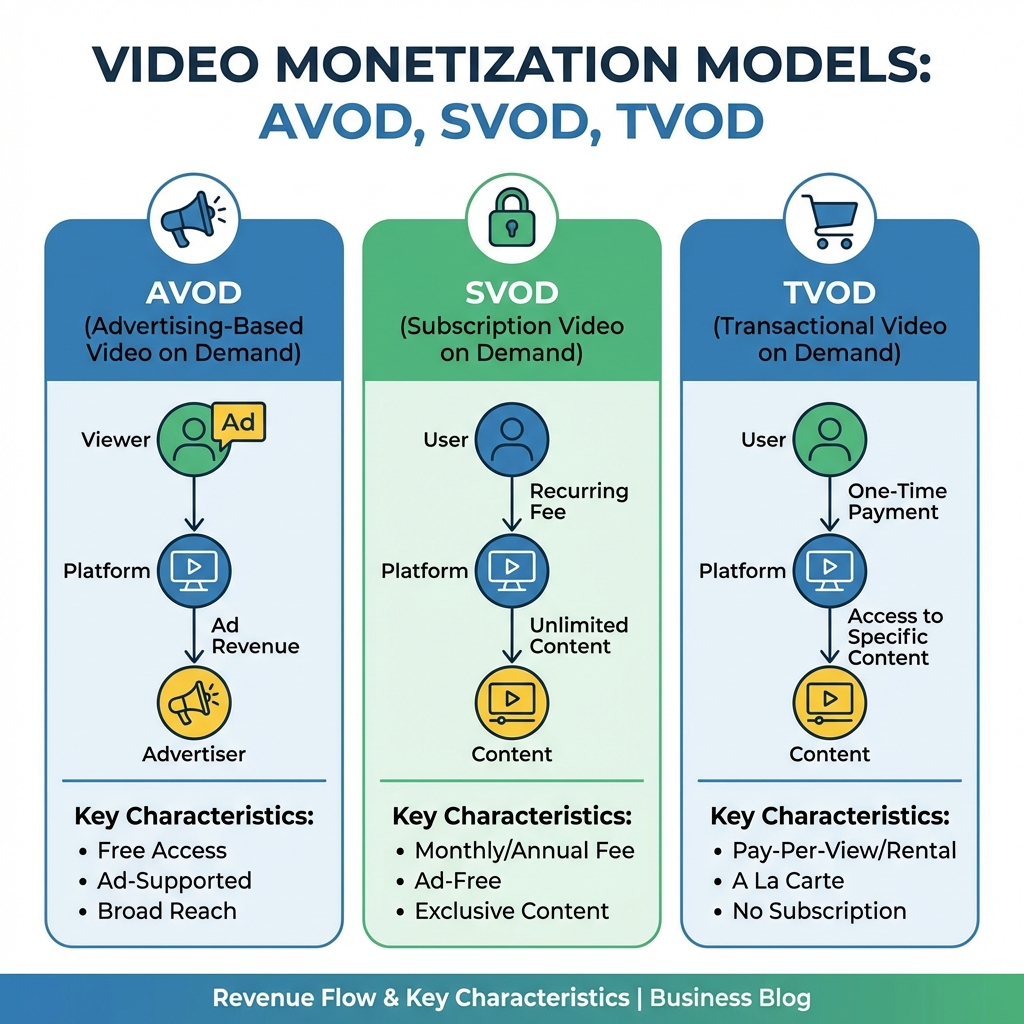
Advertising-Based Video on Demand (AVOD): This model relies on ad revenue to support free content consumption. Publishers insert ads at various points during video playback, generating income based on impressions, clicks, or completed views.
Subscription Video on Demand (SVOD): Users pay recurring fees for access to content libraries without advertisements. This model provides predictable recurring revenue but requires compelling content to justify subscription costs.
Transactional Video on Demand (TVOD): Also known as pay-per-view, this model charges users for individual content pieces or rental periods. It’s particularly effective for premium or exclusive content.
Hybrid Models: Many successful publishers combine multiple approaches, offering both free ad-supported content and premium subscription tiers.
Essential Ad Formats and Placements
Pre-Roll Advertising
Pre-roll ads appear before video content begins and represent one of the most established video monetization methods. These ads typically run 15-30 seconds and achieve high completion rates since viewers are motivated to watch their chosen content.
Implementation considerations for pre-roll include:
- Optimal ad length based on content duration
- Skip button timing (typically 5 seconds for skippable ads)
- Frequency capping to prevent viewer fatigue
- Creative quality matching content production values
Mid-Roll Integration
Mid-roll ads interrupt content at natural break points, similar to traditional television commercial breaks. While potentially more intrusive than pre-roll, mid-roll placements often generate higher revenue due to committed viewer engagement.
Best practices for mid-roll implementation:
- Strategic placement at scene transitions or natural pauses
- Appropriate ad pod lengths (typically 30-90 seconds)
- Clear resumption indicators for content continuation
- A/B testing different placement strategies
Advanced Ad Pod Strategies
Ad pods group multiple advertisements together within single breaks, maximizing revenue potential while minimizing content interruption frequency. Publishers can optimize ad pods by:
- Balancing pod length with viewer tolerance
- Implementing competitive separation rules
- Using programmatic optimization for dynamic pod composition
- Testing different pod positions throughout content
Programmatic Video Monetization
Header Bidding for Video
Header bidding has revolutionized display advertising and increasingly impacts video monetization. This technology allows multiple demand sources to bid simultaneously on video inventory before ad server calls, typically increasing revenue by 10-30%.
Implementing header bidding for video requires:
- Compatible video player technology
- Proper VAST/VPAID tag handling
- Timeout optimization to prevent playback delays
- Fallback mechanisms for failed auctions
Publishers implementing video header bidding often utilize solutions like Prebid.js, which provides standardized integration with multiple demand partners while maintaining competitive auction dynamics.
Programmatic Direct and Private Marketplaces
Beyond open market programmatic buying, publishers can establish direct relationships with advertisers through programmatic guaranteed deals and private marketplaces (PMPs). These approaches often yield higher CPMs while maintaining programmatic efficiency.
Connected TV (CTV) Monetization
The CTV Opportunity
Connected TV represents the fastest-growing segment in video advertising, with CTV ad spending projected to exceed $40 billion by 2024. Publishers with streaming capabilities can capitalize on this trend through:
- Premium inventory positioning
- Enhanced targeting capabilities
- Large screen viewing experiences
- Living room audience engagement
CTV monetization requires specific technical considerations including:
- Server-side ad insertion (SSAI) implementation
- Advanced targeting parameter support
- Cross-device measurement capabilities
- Quality of service monitoring
FAST Channel Development
Free Ad-Supported Streaming Television (FAST) channels offer publishers opportunities to create linear-style programming with traditional commercial break structures. Successful FAST implementation involves:
- Content curation and scheduling
- Automated ad insertion systems
- Audience measurement and analytics
- Distribution platform relationships
Technical Implementation Considerations
Video Player Selection and Optimization
Choosing appropriate video player technology significantly impacts monetization success. Publishers should evaluate players based on:
- Ad format support (VAST, VPAID, SIMID compatibility)
- Programmatic integration capabilities
- Analytics and reporting features
- Cross-platform compatibility
- Loading speed and user experience
Solutions like Veedmo provide publishers with comprehensive video player capabilities designed specifically for monetization optimization, including advanced ad serving features and detailed analytics.
VAST and VPAID Implementation
Video Ad Serving Template (VAST) and Video Player Ad-Serving Interface Definition (VPAID) standards ensure consistent ad delivery across different platforms and players. Proper implementation includes:
- Error handling and fallback mechanisms
- Viewability measurement integration
- Brand safety controls
- Ad verification partner support
Revenue Optimization Strategies
Audience Segmentation and Targeting
Effective video monetization relies heavily on audience understanding and segmentation. Publishers can increase revenue through:
Demographic Targeting: Age, gender, income, and education-based audience segments often command premium pricing from relevant advertisers.
Behavioral Targeting: Viewing history, engagement patterns, and content preferences enable more precise ad matching and higher conversion rates.
Contextual Targeting: Matching advertisements to content themes and viewer interests improves relevance and performance metrics.
Pricing Strategy Development
Optimizing video inventory pricing requires balancing multiple factors:
- Historical performance data analysis
- Market benchmark comparisons
- Seasonal demand pattern recognition
- Inventory scarcity management
- Quality metrics consideration
A/B Testing and Optimization
Continuous testing enables publishers to refine monetization strategies:
- Ad placement positioning tests
- Creative format comparisons
- Frequency capping experiments
- Player feature evaluations
- Pricing strategy validation
Performance Measurement and Analytics
Key Performance Indicators
Tracking appropriate metrics ensures monetization strategy effectiveness:
Revenue Metrics:
- Revenue per mille (RPM)
- Average CPM by inventory type
- Fill rate optimization
- Revenue per user (RPU)
Engagement Metrics:
- Video completion rates
- Ad completion rates
- Click-through rates
- Viewability percentages
User Experience Metrics:
- Bounce rate impact
- Session duration changes
- Return visitor frequency
- Ad blocking adoption rates
Advanced Analytics Implementation
Sophisticated measurement approaches provide deeper insights:
- Attribution modeling for multi-touch conversions
- Cohort analysis for long-term value assessment
- Machine learning algorithms for optimization
- Cross-device tracking capabilities
Emerging Trends and Future Opportunities
Interactive Video Advertising
Interactive ad formats create engaging experiences while potentially commanding premium pricing:
- Shoppable video advertisements
- Polling and survey integration
- Augmented reality experiences
- Choose-your-own-adventure narratives
Blockchain and NFT Integration
Emerging technologies offer new monetization possibilities:
- Tokenized content access
- Creator economy participation
- Decentralized advertising networks
- Smart contract automation
Artificial Intelligence Optimization
AI-powered tools increasingly support monetization efforts:
- Dynamic pricing optimization
- Automated content categorization
- Predictive audience modeling
- Real-time bidding enhancement
Best Practices for Implementation
User Experience Balance
Successful video monetization requires balancing revenue generation with user satisfaction:
- Implementing reasonable ad frequency caps
- Ensuring fast loading times
- Providing clear skip options where appropriate
- Maintaining content quality standards
Technical Performance Optimization
- Regular player performance auditing
- Ad serving latency monitoring
- Cross-browser compatibility testing
- Mobile optimization verification
Compliance and Privacy Considerations
- GDPR and CCPA compliance implementation
- Transparent data collection practices
- User consent management
- Brand safety measure deployment
Conclusion
Video monetization success requires strategic planning, technical expertise, and continuous optimization. Publishers who effectively implement diverse revenue streams, leverage programmatic technologies, and maintain positive user experiences position themselves for sustainable growth in the evolving digital landscape.
The key to maximizing video monetization lies in understanding audience preferences, implementing appropriate technology solutions, and continuously testing and refining approaches based on performance data. As the video advertising ecosystem continues evolving, publishers who stay informed about emerging trends and technologies will maintain competitive advantages in revenue generation.
By focusing on user experience while optimizing revenue streams, publishers can build sustainable video monetization strategies that benefit both their business objectives and audience satisfaction. The future of video monetization promises continued innovation and growth opportunities for publishers willing to adapt and evolve their approaches.