YouTube Viewability: Complete Guide for Publishers and Ad Ops Teams
Viewability has become the cornerstone of digital video advertising success, and YouTube’s approach to viewability measurement sets the standard for the entire industry. For publishers and ad operations professionals, understanding YouTube’s viewability metrics is crucial for optimizing ad performance, maximizing revenue, and meeting advertiser expectations.
This comprehensive guide explores YouTube’s viewability framework, measurement methodologies, optimization strategies, and the practical implications for publishers looking to improve their video advertising performance.
Understanding YouTube Viewability Fundamentals
What Constitutes Viewability on YouTube
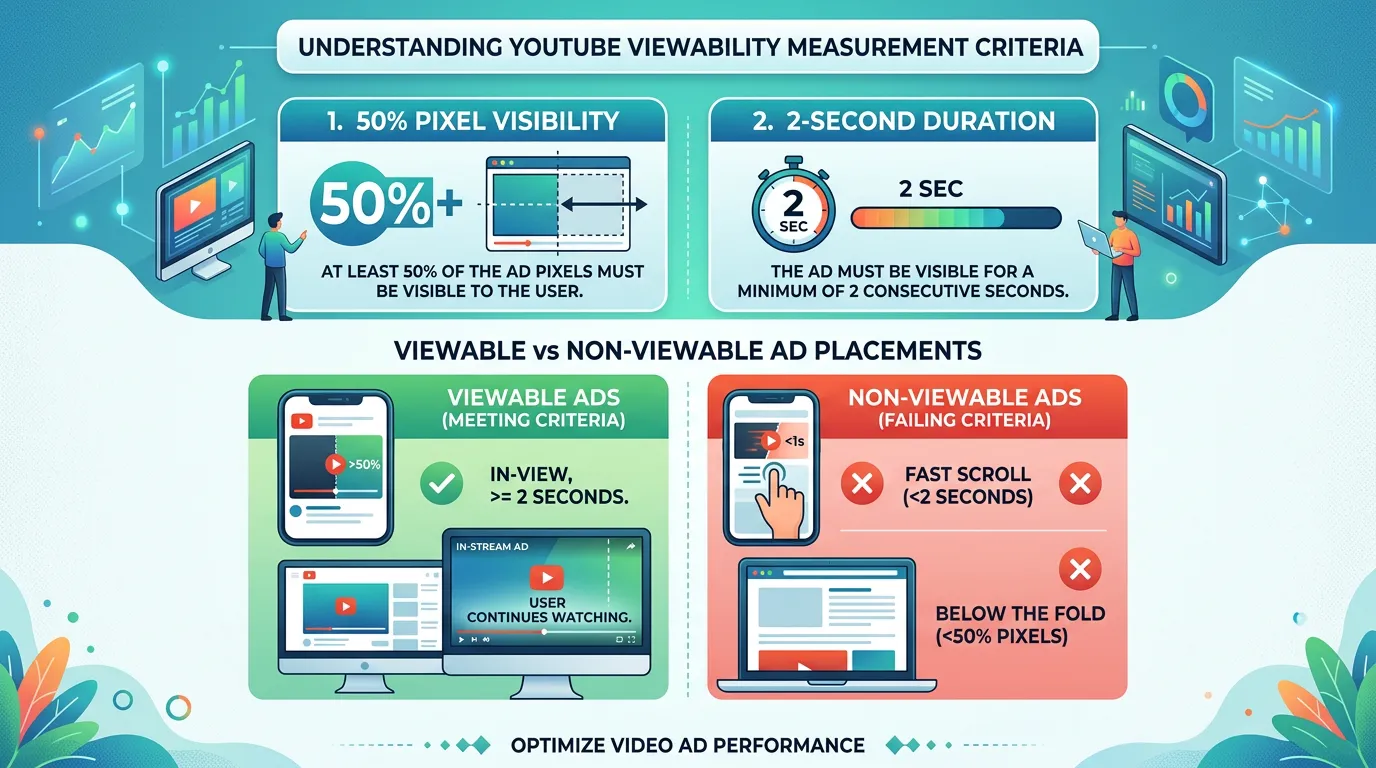
YouTube defines viewability based on the Interactive Advertising Bureau (IAB) and Media Rating Council (MRC) standards, but with platform-specific adaptations. A video ad impression is considered viewable when:
- At least 50% of the ad’s pixels are visible on screen
- The ad remains visible for a continuous 2 seconds or more
- The audio is audible (when sound is enabled)
- The video player is in an active browser tab
These criteria apply across YouTube’s various ad formats, including skippable and non-skippable pre-roll ads, bumper ads, and display advertising that accompanies video content.
YouTube’s Measurement Technology
YouTube employs sophisticated measurement technology that combines:
Geometric Detection: Calculates the visible portion of the video player using coordinate mapping and scroll position data.
Asset-Based Measurement: Monitors the actual video asset rather than just the player container, ensuring accurate measurement even when players are resized or repositioned.
Cross-Platform Consistency: Maintains consistent measurement standards across desktop, mobile web, and mobile app environments.
Real-Time Monitoring: Continuously tracks viewability status throughout the ad’s duration, not just at initial load.
YouTube Viewability vs Industry Standards
IAB/MRC Compliance
YouTube’s viewability measurement aligns with industry standards while incorporating platform-specific enhancements:
Standard Compliance:
- 50% pixel visibility threshold
- 2-second continuous visibility requirement
- Active measurement methodology
- Third-party verification support
YouTube Enhancements:
- Audio audibility measurement
- Tab activity monitoring
- Mobile app viewability tracking
- Enhanced fraud detection
Comparison with Other Platforms
While most video platforms follow IAB standards, implementation varies:
YouTube Advantages:
- More granular measurement data
- Better mobile app tracking
- Integrated fraud prevention
- Real-time optimization capabilities
Industry Variations:
- Some platforms use 1-second measurement windows
- Pixel visibility calculations may differ
- Audio measurement isn’t universal
- Cross-device tracking capabilities vary
Technical Implementation for Publishers
YouTube Player API Integration
Publishers implementing YouTube content or using YouTube’s advertising solutions should understand the technical aspects of viewability measurement:
// Example: Monitoring viewability events
player.addEventListener('onStateChange', function(event) {
  if (event.data == YT.PlayerState.PLAYING) {
    // Video started playing - begin viewability measurement
    startViewabilityTracking();
  }
});
Third-Party Verification Setup
For publishers working with multiple video solutions, including platforms like Veedmo, integrating third-party viewability measurement ensures consistent reporting:
Implementation Steps:
- Configure measurement tags in your ad server
- Ensure proper VAST tag implementation
- Set up viewability tracking pixels
- Implement cross-domain messaging for iframe scenarios
- Configure mobile app measurement SDKs
VAST Integration Considerations
When implementing VAST-compliant video advertising alongside YouTube content:
Viewability Tracking Elements:
- Include viewability verification vendors in VAST responses
- Implement proper event tracking for visibility changes
- Ensure measurement scripts load before video playback
- Configure timeout handling for measurement failures
Optimization Strategies for Better Viewability
Player Placement and Design
Above-the-Fold Positioning:
- Place video players in immediately visible areas
- Avoid positioning below multiple content blocks
- Consider sticky player implementations for longer content
- Optimize for mobile viewport constraints
Player Size Optimization:
- Use standard IAB video ad sizes when possible
- Ensure minimum 400x300 pixel dimensions
- Implement responsive design that maintains aspect ratios
- Avoid overly small embedded players
Page Load Performance
Technical Optimizations:
- Implement lazy loading for below-fold video content
- Optimize JavaScript loading to prevent render blocking
- Use content delivery networks (CDNs) for faster asset delivery
- Minimize redirects in video ad serving chains
User Experience Considerations:
- Ensure fast initial page load times
- Implement smooth scrolling behaviors
- Avoid layout shifts that affect viewability measurement
- Optimize for mobile network conditions
Content Strategy Alignment
Engagement-Driven Placement:
- Position video content within high-engagement page areas
- Align video topics with surrounding editorial content
- Use compelling thumbnails and titles to encourage viewing
- Implement playlist features to increase session duration
Troubleshooting Common Viewability Issues
Discrepancy Investigation
When viewability rates don’t meet expectations, systematic troubleshooting is essential:
Data Collection:
- Compare viewability rates across different measurement vendors
- Analyze viewability performance by device type and browser
- Review page layout and player positioning
- Check for JavaScript errors affecting measurement
- Verify proper VAST implementation
Technical Debugging
Common Issues and Solutions:
Low Mobile Viewability:
- Check viewport meta tag configuration
- Verify touch scrolling doesn’t interfere with measurement
- Ensure proper mobile player sizing
- Test across various mobile browsers and apps
Cross-Domain Measurement Problems:
- Implement proper postMessage communication
- Configure CORS headers correctly
- Verify iframe sandbox permissions
- Test measurement script loading in all environments
Player Visibility Detection Issues:
- Check for CSS properties affecting visibility calculation
- Verify z-index stacking doesn’t obscure players
- Test with various browser zoom levels
- Ensure measurement scripts aren’t blocked by ad blockers
Advanced Viewability Analytics and Reporting
Key Performance Indicators
Primary Metrics:
- Viewability Rate: Percentage of measurable impressions that meet viewability criteria
- Measurability Rate: Percentage of total impressions that can be measured for viewability
- Average View Duration: Mean time users spend viewing video content
- Completion Rate: Percentage of viewable impressions that complete playback
Secondary Metrics:
- Time to viewability (how quickly ads become viewable)
- Viewability by traffic source and referrer
- Geographic and demographic viewability variations
- Device and browser performance comparisons
Data Analysis Best Practices
Segmentation Strategies:
- Analyze viewability by content category and page type
- Compare performance across different ad formats
- Segment by user behavior patterns and session characteristics
- Track seasonal and temporal viewability trends
Optimization Insights:
- Identify high-performing page layouts and player positions
- Correlate viewability with user engagement metrics
- Analyze the relationship between load times and viewability
- Track the impact of site changes on viewability performance
Industry Trends and Future Considerations
Programmatic Advertising Impact
Viewability has become a critical factor in programmatic video advertising:
Buyer Behavior:
- Increased use of viewability as a bidding signal
- Higher CPMs for inventory with proven viewability rates
- Greater demand for transparency in measurement methodology
- Integration of viewability data into automated optimization
Publisher Adaptation:
- Implementation of viewability-based pricing models
- Enhanced reporting and transparency initiatives
- Investment in technical infrastructure improvements
- Collaboration with measurement vendors for better data quality
Emerging Technologies
Connected TV and OTT:
- Adaptation of viewability measurement for CTV environments
- Challenges in measuring viewability across different streaming platforms
- Integration with traditional TV measurement methodologies
- Evolution of standards for streaming content
Privacy and Measurement:
- Impact of privacy regulations on viewability tracking
- Development of cookieless measurement solutions
- Enhanced first-party data integration
- Blockchain-based verification systems
Best Practices for Publishers
Revenue Optimization
Inventory Management:
- Prioritize high-viewability placements for premium advertisers
- Use viewability data to inform inventory packaging decisions
- Implement dynamic pricing based on viewability performance
- Develop viewability guarantees for direct-sold campaigns
Advertiser Relationships:
- Provide transparent viewability reporting and insights
- Offer viewability optimization consulting services
- Collaborate on creative optimization for better performance
- Share best practices and industry benchmarks
Technical Excellence
Continuous Improvement:
- Regular auditing of viewability measurement implementation
- A/B testing of player configurations and placements
- Monitoring and optimization of page load performance
- Stay updated with industry standard changes and updates
Quality Assurance:
- Implement comprehensive testing procedures for new features
- Monitor viewability performance across all traffic sources
- Maintain backup measurement solutions for redundancy
- Regular calibration with third-party verification vendors
Conclusion
YouTube’s approach to viewability measurement represents the gold standard in video advertising, combining rigorous technical implementation with practical optimization insights. For publishers and ad operations professionals, mastering these concepts and implementing best practices is essential for maximizing revenue and maintaining competitive advantage in the evolving digital advertising landscape.
Success in viewability optimization requires a combination of technical expertise, strategic thinking, and continuous improvement. By focusing on user experience, implementing robust measurement systems, and staying ahead of industry trends, publishers can achieve superior viewability performance while delivering value to both advertisers and audiences.
The future of video advertising will continue to emphasize viewability as a key performance indicator, making it imperative for industry professionals to maintain expertise in measurement methodologies, optimization strategies, and emerging technologies that will shape the next generation of digital video advertising.