YouTube Viewability Standards: Complete Guide for Publishers and Ad Ops Teams
Viewability has become the cornerstone of digital advertising measurement, and YouTube’s approach to viewability standards significantly impacts how publishers and advertisers evaluate video ad performance. Understanding these standards is crucial for ad ops professionals looking to optimize their video inventory and maximize revenue potential.
Understanding YouTube Viewability Fundamentals
YouTube viewability refers to the measurement standards that determine whether a video advertisement has been genuinely viewed by a user, rather than simply served to a page. This distinction is critical because it bridges the gap between ad delivery and actual user engagement, providing a more accurate foundation for advertising value.
The Evolution of Viewability Standards
The digital advertising industry has moved beyond simple impression counting toward meaningful engagement metrics. YouTube, as the world’s largest video platform, has established viewability standards that influence how the entire video advertising ecosystem operates. These standards affect everything from campaign pricing to performance evaluation.
For publishers, understanding YouTube’s viewability requirements means better alignment with advertiser expectations and improved monetization opportunities. When your video inventory meets or exceeds these standards, it becomes more attractive to programmatic buyers and direct advertisers alike.
YouTube’s Viewability Measurement Criteria
YouTube employs specific criteria to determine whether a video ad impression qualifies as viewable, following industry standards while implementing platform-specific considerations.
Time-Based Requirements
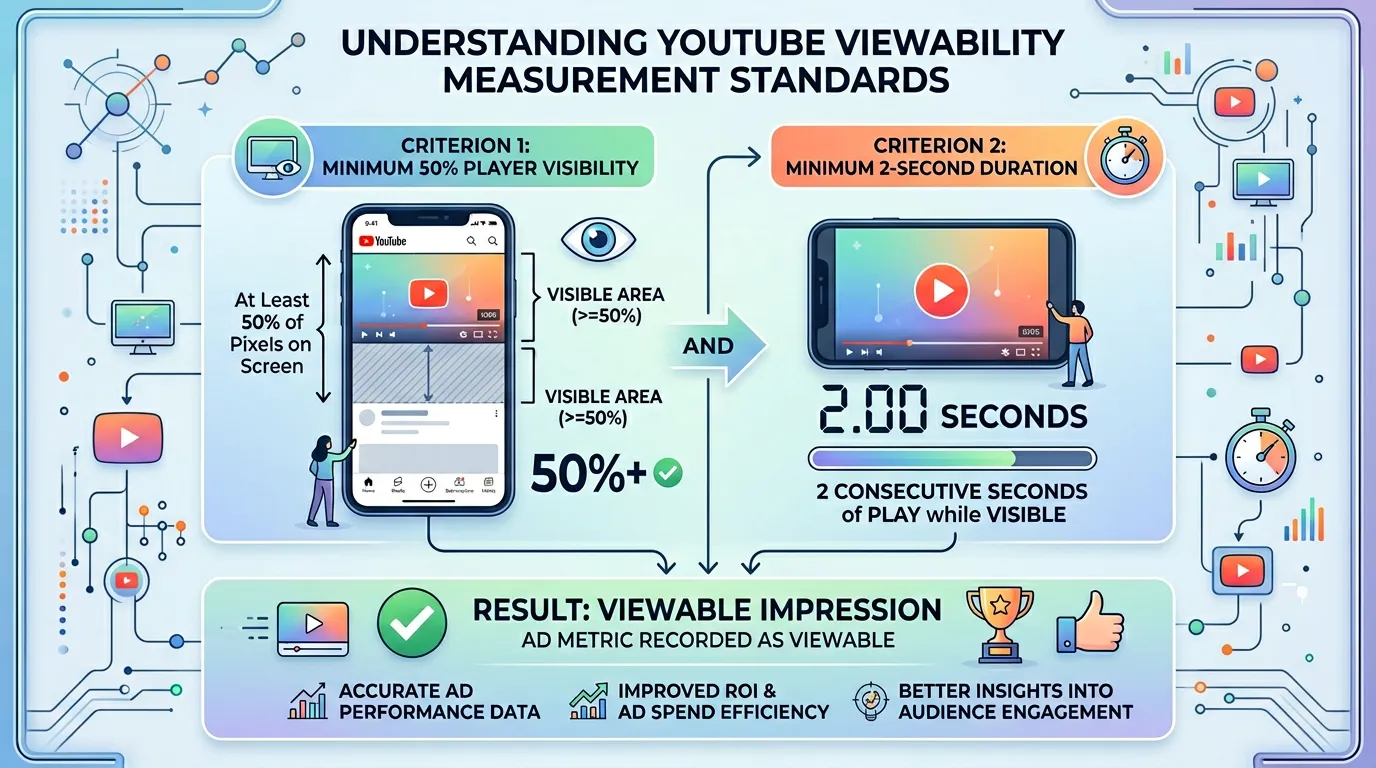
The primary YouTube viewability standard requires that a video ad plays for at least 2 consecutive seconds while at least 50% of the video player is visible on screen. This aligns with the Interactive Advertising Bureau (IAB) and Media Rating Council (MRC) standards for video viewability measurement.
This 2-second threshold represents a balance between technical feasibility and meaningful exposure. Research indicates that 2 seconds provides sufficient time for brand recognition while being achievable across various device types and connection speeds.
Visibility Thresholds
The 50% visibility requirement means that half of the video player’s pixels must be within the viewable area of the browser or app. This prevents ads from being counted as viewable when they’re below the fold, partially obscured, or playing in minimized windows.
For publishers, this visibility requirement emphasizes the importance of ad placement strategy. Video ads positioned prominently within content layouts achieve higher viewability rates, making them more valuable to advertisers.
Platform-Specific Considerations
YouTube’s implementation of viewability standards varies slightly between different viewing contexts:
Desktop Environment: Full browser visibility detection with scroll position tracking Mobile Applications: Screen real estate consideration and app-switching detection Embedded Players: Cross-domain measurement capabilities and iframe visibility assessment
Technical Implementation of Viewability Measurement
Implementing effective viewability measurement requires understanding the technical mechanisms that YouTube and other platforms use to track and verify ad visibility.
JavaScript-Based Detection
YouTube utilizes sophisticated JavaScript libraries to monitor video player visibility in real-time. These scripts continuously assess the player’s position relative to the viewport, accounting for user scrolling, window resizing, and tab switching.
The measurement system tracks multiple data points:
- Player dimensions and screen position
- Video playback status and duration
- User interaction events
- Browser focus and visibility states
Integration with Third-Party Verification
YouTube supports integration with major third-party viewability vendors including Integral Ad Science (IAS), DoubleVerify, and Moat. This integration provides additional verification layers and helps build advertiser confidence in measurement accuracy.
For publishers working with multiple video platforms, including solutions like Veedmo for custom video player implementations, understanding these integration requirements ensures consistent viewability reporting across all inventory sources.
VAST and VPAID Compliance
Video Ad Serving Template (VAST) and Video Player-Ad Interface Definition (VPAID) protocols include specific provisions for viewability measurement. YouTube’s implementation leverages these industry standards while extending functionality for platform-specific features.
VAST tags include viewability tracking pixels that fire when specific conditions are met, while VPAID creative units can implement custom viewability logic for interactive advertising formats.
Optimizing for YouTube Viewability Standards
Publishers can implement several strategies to improve their video inventory’s viewability performance, making it more attractive to advertisers and increasing revenue potential.
Strategic Ad Placement
Ad placement significantly impacts viewability rates. Publishers should prioritize video ad positions that naturally align with user viewing behavior:
Above-the-Fold Placement: Position video players in immediately visible areas of the page Content Integration: Embed video ads within article content where users actively engage Sticky Player Implementation: Use floating or sticky video players that remain visible during scrolling
Player Size Optimization
Larger video players generally achieve higher viewability rates because they’re more likely to meet the 50% visibility threshold even when partially obscured. However, player size must balance viewability optimization with user experience considerations.
Recommended approaches include:
- Responsive player sizing that adapts to screen dimensions
- Minimum player dimensions that ensure visibility threshold achievement
- Dynamic sizing based on content context and user device
Loading and Autoplay Strategies
Implementing intelligent loading and autoplay policies can significantly impact viewability performance:
Lazy Loading: Load video ads only when they’re likely to become viewable Intersection Observer API: Use modern browser APIs for precise visibility detection Autoplay Optimization: Configure autoplay settings to maximize viewable impressions while respecting user preferences
Measuring and Analyzing Viewability Performance
Effective viewability optimization requires comprehensive measurement and analysis of performance data across different contexts and audience segments.
Key Performance Indicators
Publishers should track several critical metrics related to YouTube viewability standards:
Viewability Rate: Percentage of served impressions that meet viewability criteria Time in View: Average duration that ads remain viewable beyond the minimum threshold Completion Rate by Viewability: Correlation between viewable impressions and video completion Revenue Impact: CPM and overall revenue differences for viewable versus non-viewable inventory
Segmentation and Analysis
Detailed analysis should segment viewability performance across multiple dimensions:
- Device type (desktop, mobile, tablet)
- Geographic location and connection speed
- Time of day and day of week
- Content category and page type
- Ad format and creative length
Reporting and Optimization Cycles
Establish regular reporting cycles that enable data-driven optimization decisions. Weekly viewability reports should identify trends and opportunities, while monthly deep-dive analyses can inform strategic placement and technical improvements.
Industry Impact and Future Considerations
YouTube’s viewability standards continue to evolve alongside broader industry developments in measurement and verification technology.
Programmatic Implications
Viewability has become a critical factor in programmatic video advertising, with many buyers setting minimum viewability thresholds for bid participation. Publishers with consistently high viewability rates often achieve premium pricing in programmatic auctions.
Header bidding implementations increasingly incorporate viewability predictions, allowing publishers to optimize auction dynamics based on expected viewability performance.
Privacy and Measurement Challenges
Evolving privacy regulations and browser policies present ongoing challenges for viewability measurement. Publishers must stay informed about changes to third-party cookie policies, privacy sandbox initiatives, and consent management requirements that may affect measurement capabilities.
Emerging Technologies
Connected TV (CTV) and streaming environments introduce new considerations for viewability measurement. While traditional web-based measurement faces browser limitations, CTV environments may offer more precise measurement capabilities through platform-specific APIs.
Best Practices for Implementation
Successful viewability optimization requires coordinated effort across technical implementation, content strategy, and performance analysis.
Technical Implementation Checklist
- Implement comprehensive viewability measurement across all video inventory
- Ensure compatibility with major third-party verification vendors
- Configure proper VAST/VPAID tag implementation for accurate tracking
- Test viewability measurement across different devices and browsers
- Monitor measurement discrepancies and investigate anomalies
Operational Excellence
- Establish clear viewability targets aligned with advertiser requirements
- Create regular reporting processes for stakeholder communication
- Implement A/B testing for placement and format optimization
- Maintain documentation of viewability measurement methodologies
- Coordinate with sales teams on viewability-based pricing strategies
Continuous Improvement
Viewability optimization should be treated as an ongoing process rather than a one-time implementation. Regular analysis of performance data, testing of new placement strategies, and adaptation to industry standard changes ensures sustained success.
Publishers who master YouTube viewability standards position themselves advantageously in an increasingly competitive video advertising landscape. By understanding measurement requirements, implementing technical best practices, and continuously optimizing performance, publishers can maximize the value of their video inventory while meeting advertiser expectations for meaningful engagement.
The investment in viewability optimization pays dividends through improved advertiser relationships, premium pricing opportunities, and sustainable revenue growth in the evolving digital video advertising ecosystem.